Your Customer Already Knows the Car. The Conversation Is About Whether They Trust You Enough to Buy It From You

TABLE OF CONTENTS
1. The Customer Who Walks In Knowing More Than You Expected
Picture a customer walking into your showroom on a Saturday morning. They are well dressed, unhurried, and they move directly to the variant they want without pausing to browse. When your sales executive greets them, they already know the engine specifications, the fuel economy figures, the waiting period for their preferred colour, and the on-road price including the current exchange offer.
They have spent three weeks researching. They have read every expert review. They have watched ownership videos on YouTube. They have spent time on automotive forums comparing real owner experiences. They have a shortlist of two vehicles and your model is one of them.
This customer is not looking to be educated about the car. They are looking for something else entirely.
They are looking for a reason to trust your dealership with one of the largest purchases they will make this year.
That distinction matters enormously. Because the sales approach that works for a customer who needs product education is almost exactly the wrong approach for a customer who already has it. And in modern automotive retail, the second type of customer is increasingly the norm.
2. How the Automotive Buyer Has Changed
A decade ago, the average car buyer arrived at a dealership having done a reasonable amount of research but still relying heavily on the sales executive for product knowledge. The information asymmetry between the customer and the dealership was significant. The sales executive's expertise was a genuine differentiator in the purchase decision.
That information asymmetry has been almost entirely eliminated by the internet. Today's automotive customer arrives at the showroom having done the kind of research that would once have required speaking to a product specialist. They know which variants offer which features. They know how the vehicle compares to its closest competitors on the metrics that matter to them. They know approximately what discount is realistic in the current market. They have read reviews from people who bought the same vehicle six months ago and know exactly what those owners love and what they wish were different.
The sales executive who responds to this customer with a standard product walkthrough is not adding value. They are delivering information the customer already has, in less depth than the sources the customer has already consulted. That customer does not become more likely to buy because of that conversation. They become less confident that this dealership understands what they actually need.
3. What the Informed Customer Actually Needs From the Conversation
The informed automotive buyer does not need product information. What they need from the showroom conversation is significantly more nuanced and, when the sales executive gets it right, significantly more valuable to the dealership.
They need validation. They have done extensive research and formed strong opinions. A sales executive who engages with those opinions thoughtfully, who acknowledges what the customer has got right and adds genuine depth where the research was incomplete, builds credibility far more effectively than one who delivers a rehearsed product pitch.
They need personalization. The informed customer has been engaging with generic content throughout their research journey. What the showroom conversation can offer that no website or review can is a response to their specific situation. Their specific usage patterns. Their specific concerns. Their specific trade-in circumstances. The conversation that addresses their particular needs rather than the average customer's needs is the conversation that earns trust.
They need reassurance about the things they cannot research online. Purchase security. After-sales service quality. The dealership's track record with customers in situations similar to theirs. The genuine reliability of delivery timelines and financing commitments. These are the things that the internet cannot fully answer and that only a trusted human relationship can provide.
And they need to feel genuinely heard rather than processed. The informed customer knows that dealerships have a sales process. They are not naive. But they are sensitive to whether the person they are speaking to is actually listening to them as an individual or moving them through a script. The difference between those two experiences is the difference between a customer who feels a relationship forming and one who remains guarded and non-committal.
4. Where Conventional Sales Approaches Break Down With Informed Buyers
Most automotive sales training was developed for a customer type that is increasingly rare. The customer who arrives needing guidance, who looks to the sales executive as the expert, and whose purchase decision is heavily influenced by the product knowledge and presentation skill of the person they speak to.
When the same approaches are applied to an informed buyer, the results are counterproductive. Feature-led presentations feel condescending to a customer who already knows the features. Closing techniques that assume the customer needs to be persuaded about the product feel pushy to a customer who is already convinced about the product and is trying to decide whether they can trust the dealership. Questions that are designed to establish basic needs feel basic to a customer whose needs are already clearly defined in their own mind.
The informed buyer responds to a different kind of sales executive. One who listens more than they talk in the early stages of the conversation. One who asks questions that go beyond product preferences to understand the broader context of the purchase decision. One who treats the customer's research as a foundation to build on rather than a challenge to overcome. One who adds value through insight and personalization rather than through information delivery.
In-showroom conversation intelligence reveals, with considerable precision, where conventional sales approaches are breaking down with informed buyers in your specific dealership. The conversations where the customer disengages. The moments where a product walkthrough triggers a polite but definitive withdrawal of engagement. The questions that land well and the ones that create friction.
5. The Conversation Intelligence That Serves the Informed Buyer
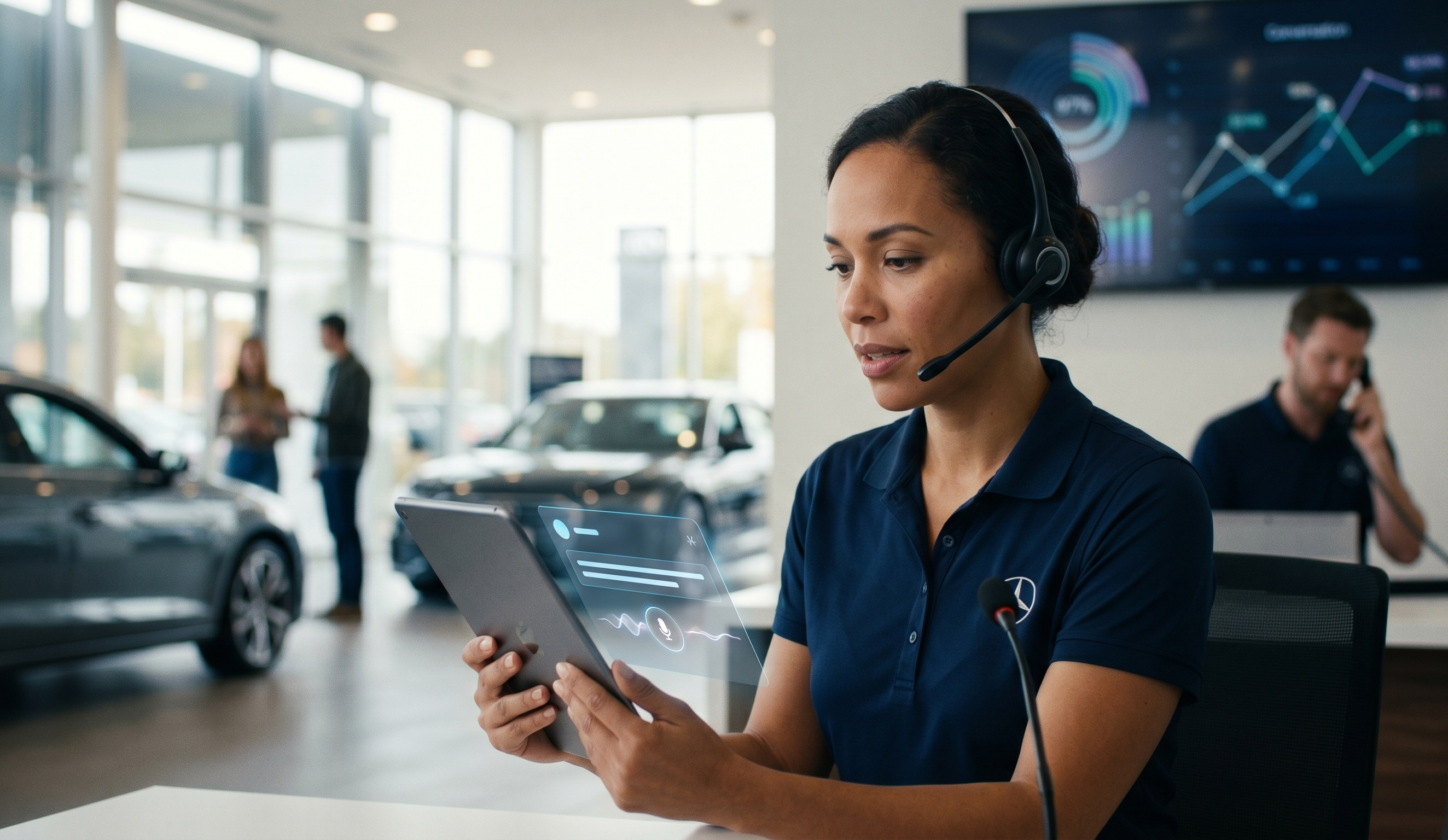
When a dealership deploys voice intelligence across its showroom conversations, the patterns that emerge around informed buyer interactions are among the most commercially actionable insights the platform produces.
The platform identifies the specific conversational approaches that build trust with informed buyers faster. The questions that signal genuine curiosity about the customer's situation rather than an attempt to qualify them. The moments when a sales executive's response demonstrates real expertise beyond the standard product script and how those moments change the customer's engagement level. The points in the conversation where the transition from product discussion to personal relationship happens naturally and what enables it.
It also identifies the failure patterns with equally useful precision. The product monologue that continues past the point where an informed buyer has stopped finding it useful. The attempt to educate a customer about something they already know, picked up clearly in their response, that creates a subtle but damaging impression that the sales executive is not really listening. The missed opportunity when a customer reveals a specific concern that the executive does not follow up on because they are focused on their presentation sequence rather than the customer's actual agenda.
These patterns are the difference between a showroom conversation that earns a customer's trust and one that leaves them deciding to visit another dealership before making their final decision.
6. Coaching Sales Executives for the Informed Buyer Era
The shift required in how sales executives approach informed buyers is significant but learnable. It is not about reducing their product knowledge. It is about changing the way that knowledge is deployed in conversation.
The most effective approach with an informed buyer is to use product knowledge reactively rather than proactively. Rather than presenting what the executive knows, they listen for what the customer reveals about their specific priorities and then respond with the precise product and experience knowledge that is most relevant to that individual situation.
That shift, from presentation mode to responsive listening mode, is one of the most impactful coaching interventions a dealership can make. But it requires the dealership to know exactly where and how each sales executive is currently getting the balance wrong.
Conversation intelligence provides that knowledge. It shows which executives are defaulting to product presentations with informed buyers and at what point in the conversation that default is triggered. It shows which executives have already made the transition to a more responsive approach and what that sounds like in practice. It gives coaches the specific evidence they need to make the coaching concrete, personal, and immediately applicable.
The informed buyer era is not a challenge that more product training will solve. It requires a different kind of sales excellence, grounded in listening, personalization, and trust-building. And developing that excellence across a sales team requires the kind of conversation-level insight that only voice intelligence can provide.
7. Trust Is the Only Product That Matters Now
The automotive product information gap between customer and dealership has closed. It will not reopen. The customer who walks into your showroom on Saturday morning knowing the specs, the pricing, and the realistic discount has access to the same information that will be available to every car buyer from now on.
What has not changed, and what cannot be replicated by any amount of online research, is the value of genuine human trust. The confidence that comes from a conversation with someone who understood exactly what you needed, added real value to your decision process, and gave you reason to believe that this dealership will look after you not just on the day of the sale but for every service and every interaction that follows.
That trust is built in conversation. And understanding exactly how it is built, and how it is lost, in your specific dealership with your specific customers is the commercial intelligence that matters most in modern automotive retail.
"Your customer has done the research. The conversation is about what happens next. Voice intelligence makes sure you know what is working."
"Want to find out how your showroom conversations are landing with today's informed automotive buyer?Book a free demo
and we will show you what the conversation data reveals about where trust is being built and where it is being lost."

About Jinn Insights
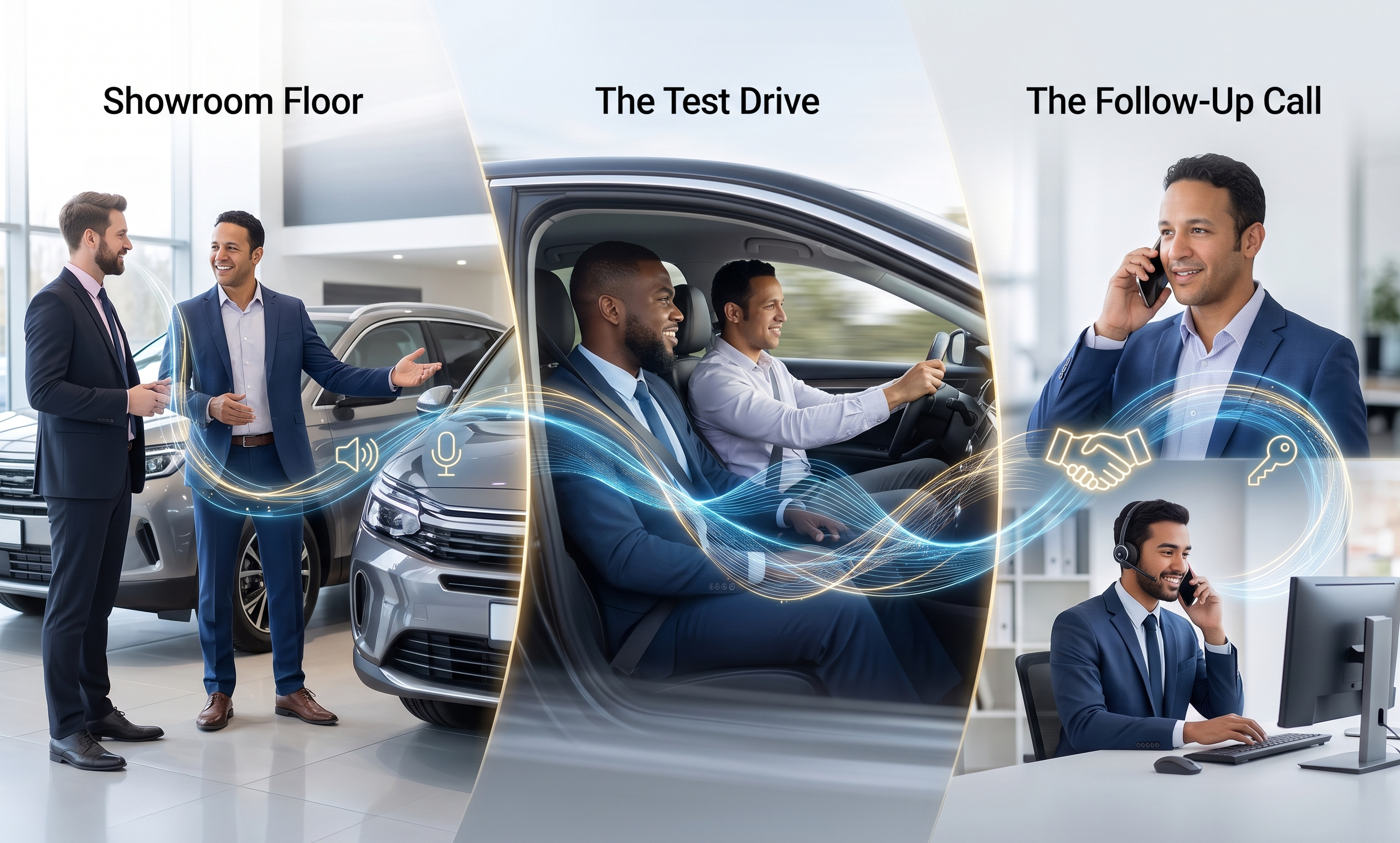
Jinn Insights studies what happens in real sales conversations on the retail floor. Our insights come from showroom, test drive and follow-up conversations captured by Jinn and scored from greeting to close.
Share Your Thoughts
Join the conversation and let us know what you think