The Test Drive Conversation That Closes Sales: What AI Reveals About the Moments That Matter Most Inside the Vehicle
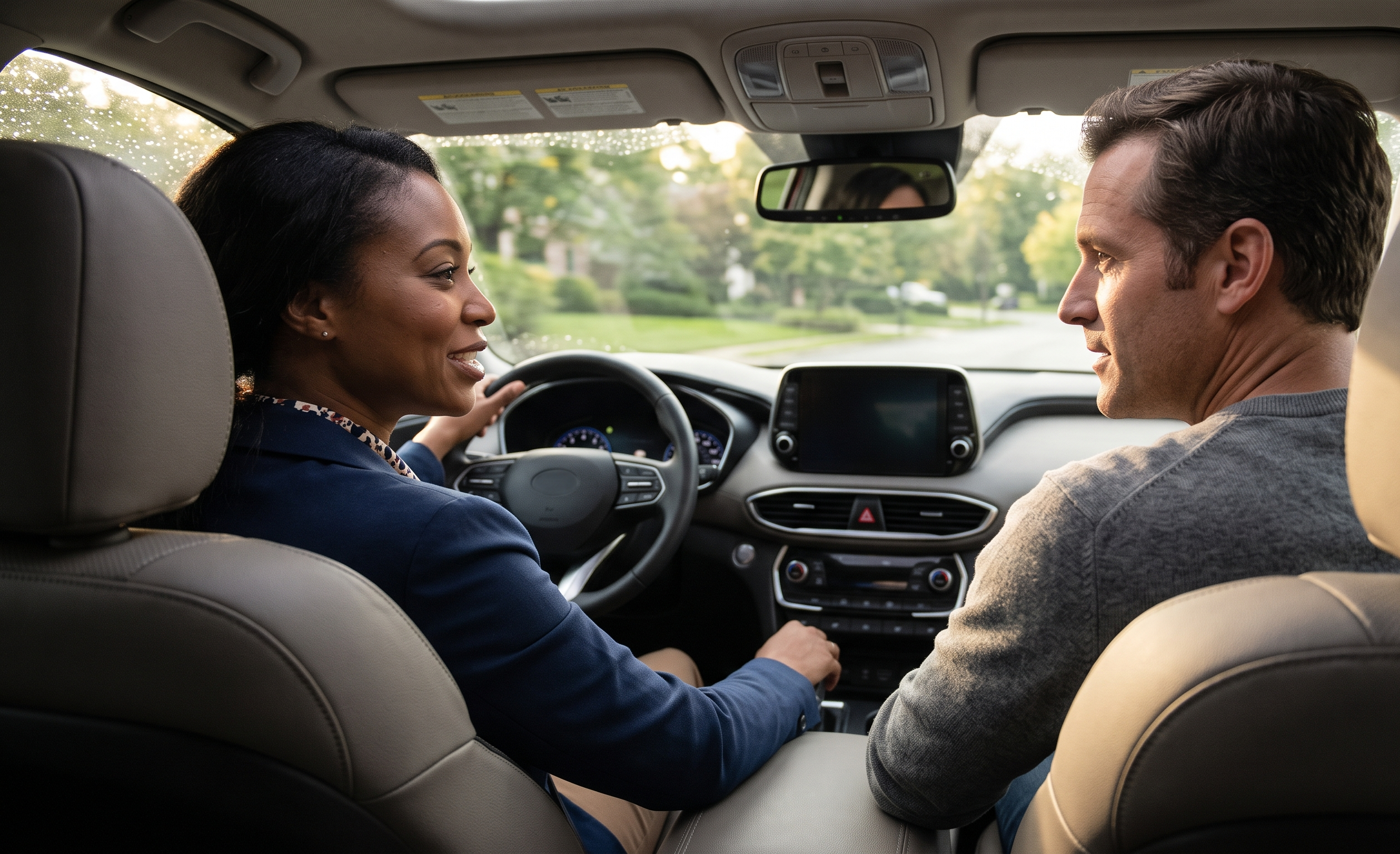
TABLE OF CONTENTS
1. Not All Test Drives Are Created Equal
Every dealership knows that some test drives convert and some do not. What very few dealerships know is why.
The conventional explanation is that the customer either liked the car or did not. That the vehicle either met their expectations or fell short. That the decision was ultimately about product fit, and that the conversation during the drive was incidental to that outcome.
That explanation is wrong. Or more precisely, it is incomplete in a way that costs dealerships a significant number of sales they should be closing.
When in-vehicle conversation intelligence analyses large numbers of test drive conversations and correlates them with sales outcomes, the patterns that emerge tell a different story. The vehicle is rarely the primary variable that separates a converting test drive from a non-converting one. The conversation is.
Specifically, it is the quality of the sales executive's conversational behavior during the thirty minutes inside the vehicle that most consistently predicts whether a customer moves forward toward a purchase or drifts into the extended consideration phase from which many deals never return.
2. The Moments That Define the Outcome
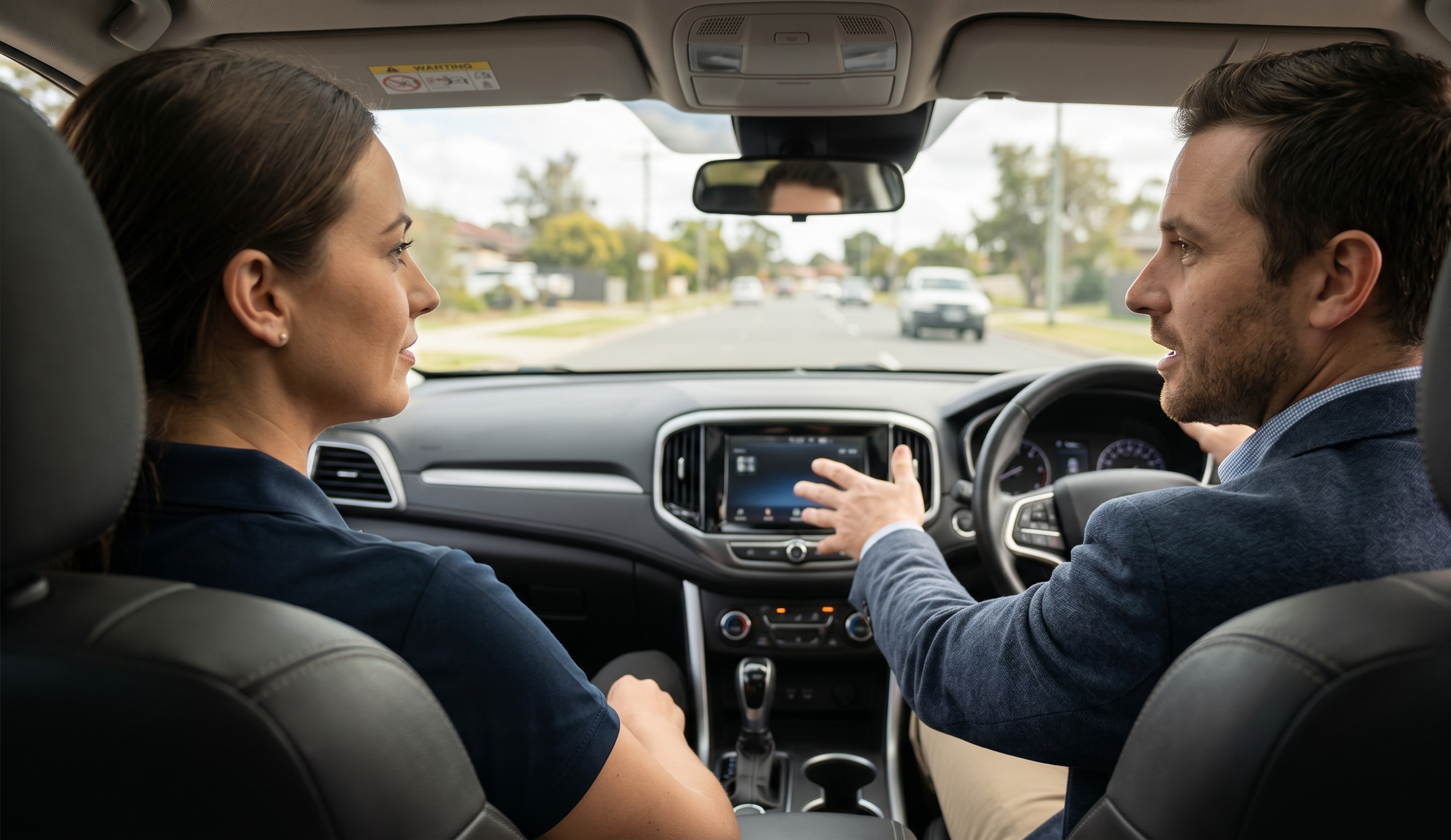
AI analysis of test drive conversations identifies several specific moments that appear consistently in drives that convert and are largely absent from drives that do not. These moments are not dramatic. They do not involve high-pressure closing techniques or elaborate product demonstrations. They are subtle, conversational, and entirely learnable once they are visible.
• The Reaction Engagement Moment: In every test drive, the customer has at least one spontaneous positive reaction to the vehicle. A comment about the ride quality. An observation about how responsive the steering feels. A remark about how much better the visibility is than they expected. These reactions are brief and often almost throwaway in tone, but they are commercially significant. In converting test drives, the sales executive catches these reactions and engages with them specifically. Not with a generic affirmation but with a response that deepens the customer's engagement with the positive experience they just had. Something that connects that spontaneous moment of satisfaction to the customer's stated priorities or lifestyle context. In non-converting test drives, these reactions pass unacknowledged or receive only a generic response. The customer's positive moment is noted but not amplified. The emotional peak that the reaction represented is allowed to subside rather than being built upon.
• The Concern Surface Moment: Almost every customer carries a concern into the test drive that their research alone could not fully resolve. In converting test drives, that concern surfaces during the drive itself, often because the direct experience of the vehicle either confirms or contradicts what the research suggested. The sales executive who creates the conversational space for that concern to surface, and who then addresses it with specific, credible information grounded in the customer's direct experience, is doing something extremely valuable. They are resolving a barrier to purchase at the peak moment of the customer's product engagement. In non-converting test drives, concerns either do not surface during the drive because the executive's conversational approach does not create the space for them, or they surface but are handled in a way that feels dismissive or insufficiently substantive. The concern leaves the drive unresolved and becomes the dominant factor in the extended consideration phase that follows.
• The Life Context Moment: Customers on test drives regularly make spontaneous comments that reveal how they are mentally placing the vehicle in their life. A reference to a regular journey they make. A comment about how the family would feel about the space. An observation about how a particular feature would work in their daily routine. These moments are invitations. The customer is not asking a direct question but they are offering the sales executive a window into the specific context of their purchase decision. In converting test drives, the executive sees that window and steps through it. They ask a follow-up question that deepens the customer's sense of how the vehicle fits their life, which is the emotional process through which ownership conviction is built. In non-converting test drives, those moments pass without follow-up. The executive continues with the drive or returns to a product topic rather than engaging with the personal context the customer just offered. The opportunity to build ownership conviction at the most natural possible moment is lost.
• The Competitive Mention Moment: When a customer mentions another vehicle they have tested or are considering during the test drive, the executive has a choice. They can acknowledge the mention neutrally and move on. They can engage with it directly and use it to clarify where this vehicle has a genuine advantage in the context of what the customer cares about. Or they can respond defensively in a way that makes the customer feel their consideration of alternatives is being challenged rather than understood. In converting test drives, competitive mentions are handled with the third approach. The executive does not deny or dismiss the competing vehicle. They engage with the specific comparison the customer is making and provide insight that is genuinely useful to the customer's decision rather than simply promotional. That response earns credibility and advances the relationship. In non-converting test drives, competitive mentions are often handled with either neutral deflection or a defensiveness that subtly damages the trust the executive has been building.
3. What AI Sees That Human Observers Cannot
A dealership manager who accompanies a sales executive on a test drive can observe the conversation directly. But they can only do this occasionally, their presence changes the dynamic of the interaction, and they can observe only one drive at a time.
An in-vehicle conversation intelligence platform analyses every test drive conversation across the dealership. It identifies the presence or absence of each of the commercially significant moments described above in every drive, not just the ones that a manager happened to observe. It correlates those patterns with sales outcomes across dozens and then hundreds of analyzed conversations, producing a statistically grounded picture of what actually drives test drive conversion in this specific dealership with this specific customer base.
That picture is qualitatively different from what any observation-based coaching approach can produce. It is not shaped by which test drives a manager happened to sit in on or which executive's approach happened to be top of mind after a recent training session. It is drawn from the complete body of test drive conversations over time and it reflects what is actually happening rather than what anyone believes or assumes is happening.
4. Turning Pattern Recognition Into Coaching
The commercial value of knowing which conversational patterns predict test drive conversion is only realized when that knowledge translates into improved performance across the sales team.
That translation happens through coaching that is specific enough to change behavior. Not coaching that tells an executive they need to handle customer concerns better during the test drive, but coaching that shows them exactly where in their last three test drives a concern surfaced and was not adequately engaged with, and exactly what a more effective response to that moment would have sounded like.
That specificity is what makes coaching produce lasting change rather than temporary adjustment. And it is only available when the conversation data from the vehicle is captured, analyzed, and connected to the coaching conversation in a direct and evidence-based way.
Over time, as the patterns that convert test drives become consistent practice across the team, the conversion rate from test drive to sale improves. Not dramatically or overnight, but measurably and durably. And because test drive conversion is one of the highest-leverage metrics in automotive retail, with a direct impact on revenue per unit of sales executive time and per unit of vehicle wear, even a modest improvement in that rate produces a significant commercial return.
5. The Test Drive Your Sales Executives Are Having Versus the One They Could Be Having
Every test drive is an opportunity to advance a sale at the moment of peak emotional engagement. The customer is in the vehicle. They are experiencing the product directly. Their responses are honest and immediate. The relationship between executive and customer is at its most natural and least formal.
That moment is either used effectively or it is not. The difference between a test drive that builds the conviction to move forward and one that leaves the customer feeling pleasant but uncommitted comes down to whether the right conversational moments were recognized and acted on.
Voice intelligence makes those moments visible, analyzable, and teachable. The test drive conversation that was previously heard by one person in the moment and then effectively lost becomes a training asset, a coaching resource, and a performance management tool.
The thirty minutes inside the vehicle are the most valuable thirty minutes in automotive retail. In-vehicle conversation intelligence makes sure they are used as well as they possibly can be.
"The moments that close sales happen inside the vehicle. AI reveals exactly what they look like so your team can make them happen every time."
"Want to see which conversational patterns in your test drives are predicting conversion and which ones are predicting delay?Book a free demo
and we will show you what your showroom conversation data reveals."

About Jinn Research
Jinn Research studies what happens in real sales conversations on the retail floor. Our insights come from showroom, test drive and follow-up conversations captured by Jinn and scored from greeting to close.
Share Your Thoughts
Join the conversation and let us know what you think