The Thirty Minutes Inside the Vehicle: Why the Test Drive Conversation Is the Most Valuable and Most Wasted Intelligence in Automotive Retail
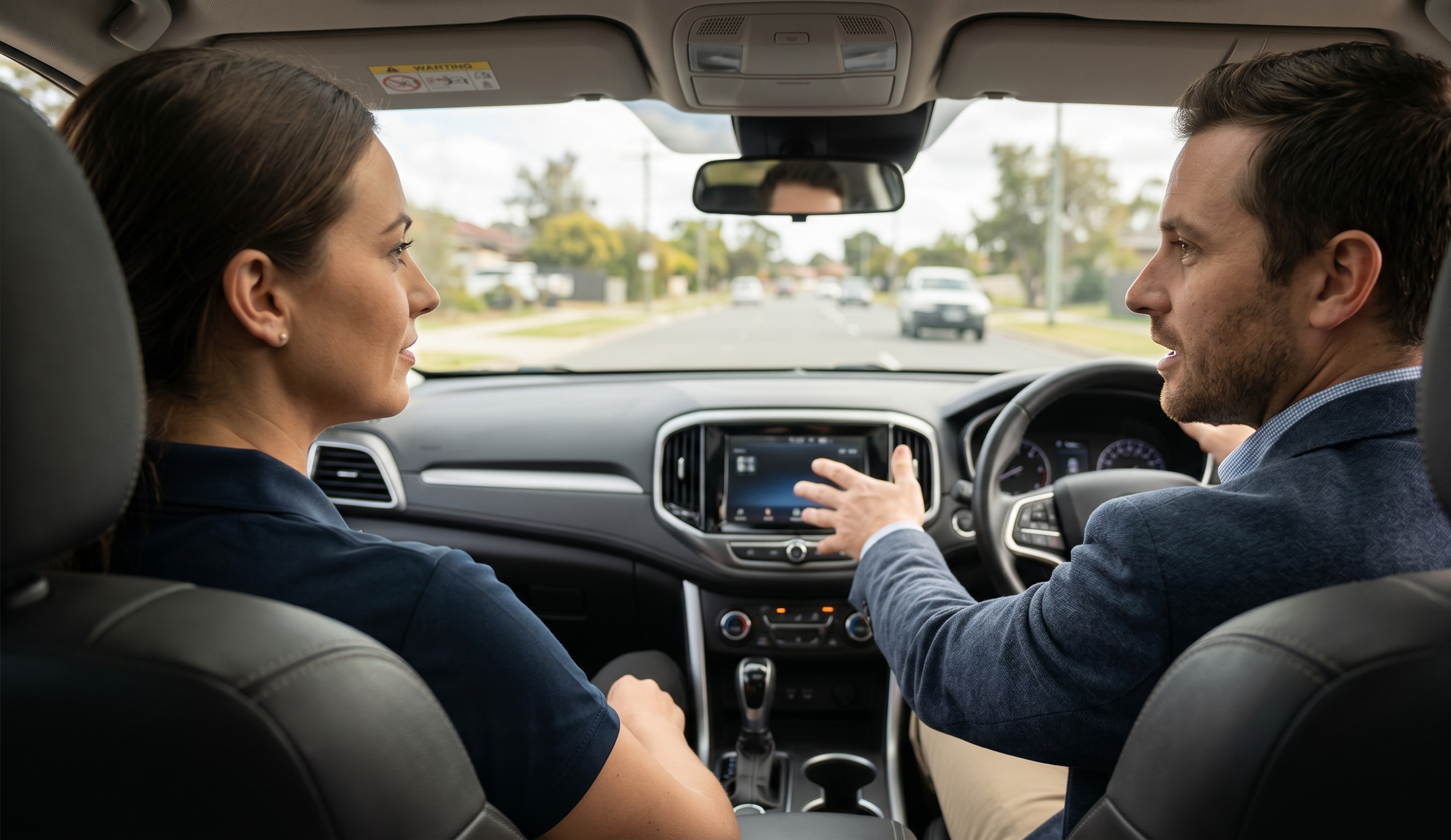
TABLE OF CONTENTS
1. Nothing Else in the Sales Cycle Comes Close
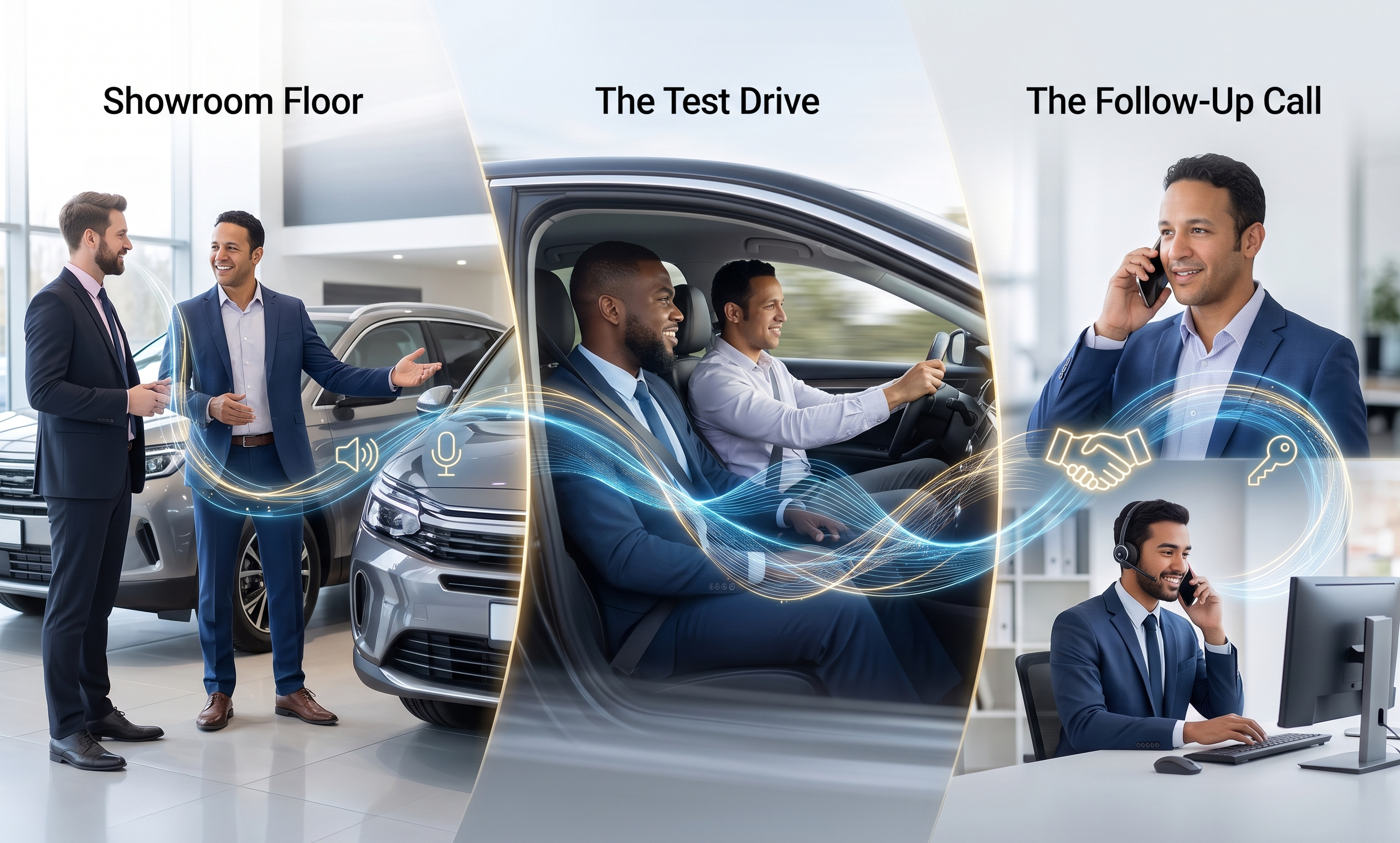
Think about every conversation that happens between a sales executive and a customer across the full automotive sales cycle. The initial showroom greeting. The walk-around. The specification discussion. The pricing conversation. The follow-up calls over days and weeks.
Each of those conversations has value. But none of them produce the quality of intelligence that comes from the thirty minutes when the customer and the executive are inside the vehicle together on a test drive.Each of those conversations has value. But none of them produce the quality of intelligence that comes from the thirty minutes when the customer and the executive are inside the vehicle together on a test drive.
The reason is straightforward. Every other conversation in the automotive sales cycle happens in a controlled environment where the customer is, to varying degrees, performing. In the showroom, they are presenting a version of themselves that is careful, measured, and appropriately guarded. In follow-up calls, they are managing the relationship strategically, giving away only as much information as they feel comfortable sharing.
In the vehicle during a test drive, something different happens. The customer is experiencing the product directly and in real time. Their responses are immediate and unfiltered. The formal distance of the showroom dissolves. The conversation that emerges in those thirty minutes is the most honest, most spontaneous, and most commercially revealing interaction that the dealership will have with that customer throughout the entire sales cycle.
And in the vast majority of dealerships, it is captured by nobody and analyzed by nobody. It exists in the memory of one sales executive and fades within hours.
2. What Customers Reveal During the Test Drive That They Reveal Nowhere Else
The test drive conversation produces several categories of intelligence that cannot be reliably obtained from any other interaction in the sales cycle.
• Real-time product reactions: The customer's immediate, unedited response to the vehicle as they experience it. The way the seat feels. The visibility from the driving position. The sound of the engine at speed. The responsiveness of the technology. These reactions are expressed spontaneously as they happen and they reveal the customer's genuine emotional relationship with the vehicle far more accurately than any considered response to a showroom question could. A customer who says "this is much smoother than I expected" during the drive has just told you something important about a concern they may have carried into the test drive from their research or from a previous ownership experience. That concern has been addressed positively by the direct experience of the vehicle, and a skilled executive should build on that moment explicitly rather than letting it pass unacknowledged.
• Spontaneous competitive comparisons: Customers on test drives regularly mention other vehicles they have driven or are considering. Not necessarily because they are trying to negotiate, but because the direct experience of the vehicle naturally triggers comparisons in their mind. These mentions are gold. They tell the executive exactly which competing vehicle is the primary alternative in the customer's consideration set and what attributes they are comparing it on. In the showroom, customers are often reluctant to reveal competitive consideration directly. On the test drive, it comes out naturally. The executive who hears "this feels more planted than the other one I drove last week" and does not engage with that comparison specifically is missing one of the most actionable intelligence moments in the sales cycle.
• The concerns that research did not resolve: Every customer arrives at the test drive carrying concerns that their online research did not fully address. Some of those concerns are about product performance, things they read about but are not sure they believe until they experience the vehicle themselves. Others are about practicality, how the vehicle fits into the specific contexts of their daily life. Others are about ownership confidence, whether they are making the right decision given the investment involved. These concerns surface during the test drive in ways they do not surface in showroom conversations. The customer who asks about the boot capacity while parked at a junction is placing the vehicle in their life. The one who asks about fuel consumption on a specific type of journey they make regularly is testing whether the vehicle meets a need their research left uncertain.
• Family and lifestyle context: Test drives regularly surface information about the customer's domestic circumstances that has direct implications for which variant, configuration, or feature set is most relevant. Comments about children, pets, a long daily commute, a specific regular journey, or a partner's preference about the color or technology level are all commercially relevant intelligence that rarely surfaces with the same naturalness in a showroom conversation.
3. What Sales Executives Are Currently Missing During the Test Drive
The gap between the intelligence available in the test drive conversation and the intelligence that sales executives typically extract from it is significant in most dealerships. It is not a gap created by incompetence. It is a gap created by the absence of any system for capturing and learning from what happens inside the vehicle.
Some executives talk too much during the drive. They fill the thirty minutes with product information that the customer has already researched, creating a monologue rather than a conversation and missing the real-time reactions the customer is having because they are focused on their own delivery.
Others are so focused on creating a positive emotional atmosphere that they avoid anything that might feel commercial. The drive is pleasant and the rapport is good but the executive has not used the thirty minutes to advance their understanding of where the customer actually is in their decision or what specific concerns remain.
Others do pick up on the signals the customer sends during the drive but do not follow up on them effectively in subsequent conversations because the specific details of what was said are no longer clearly in their memory by the time the first follow-up call happens two days later.
All of these failure patterns are visible in conversation data. All of them are coachable. And none of them can be addressed precisely without the in-vehicle conversation evidence that shows exactly what happened during the drive and where the opportunities were missed.
4. The Intelligence That Would Have Changed the Outcome
The test drive conversation does not just have value in the moment. It has value across the entire remainder of the sales cycle because it is the richest source of customer intelligence available to the dealership.
Every follow-up call should be informed by what the customer said during the test drive. The concern they mentioned about the boot space should be addressed in the first follow-up with specific information about the configuration options that address it. The competitive comparison they made spontaneously should inform how the executive positions the vehicle against that specific alternative in subsequent conversations. The enthusiasm they expressed about a particular feature should be referenced in a way that reconnects the customer emotionally to the experience they had in the vehicle.
When the test drive intelligence informs the follow-up in this way, the follow-up call is qualitatively different from a generic contact event. The customer feels that the executive was listening during the drive. They feel that their specific situation is understood. And they feel that each conversation is building on what came before rather than starting from scratch.
That continuity of understanding is what keeps customers engaged through the long consideration phase rather than drifting toward a competitor who may be making them feel equally or more understood.
5. Making the Test Drive Work as Hard as It Should
An in-vehicle conversation intelligence capability changes what dealerships can do with the thirty minutes of the test drive. Every conversation during the drive is captured and analyzed alongside the showroom intelligence that preceded it. The platform identifies the commercially significant moments, the product reactions, the competitive mentions, the surfaced concerns, the lifestyle context, and surfaces them as structured intelligence that informs every subsequent interaction.
The sales executive who reviews the test drive intelligence before making a follow-up call is prepared in a way that their competitor is almost certainly not. They know exactly what the customer expressed during the drive, what moved them, what concerned them, and what would most effectively continue the momentum that the test drive created.
The coaching that flows from test drive conversation data is among the most impactful in automotive retail because it addresses the highest-value intelligence-generating event in the sales cycle with a precision that no other coaching input can match.
6. The Thirty Minutes That Should Define the Sale
The test drive is the moment in the automotive sales cycle when a customer decides whether they could own this vehicle. Not in a final, committed sense, but in the essential emotional sense that makes everything that follows either a natural progression or an uphill struggle.
When the test drive goes well and the intelligence it generates is captured and used effectively, the sale becomes a matter of managing the practical factors that remain. Financing, variant availability, timing, exchange value. All of those are solvable problems for a customer who has already decided emotionally.
When the test drive intelligence is lost and the follow-up proceeds without it, the emotional momentum from the drive erodes. The customer who was almost there during the drive becomes uncertain again. The practical factors that should have been easily navigable become the reasons the deal drifts for months or disappears entirely.
Thirty minutes. More intelligence than any other conversation in the sales cycle. And in most dealerships, not a single word of it captured. That is the most significant and most correctable intelligence gap in automotive retail today.
"The test drive is where the sale is made emotionally. In-vehicle conversation intelligence makes sure that moment is never wasted."
"Want to find out what is happening in your test drive conversations and how that intelligence can transform your follow-up strategy?Book a free demo
and we will show you what in-vehicle conversation analytics reveals."

About Jinn Research
Jinn Research studies what happens in real sales conversations on the retail floor. Our insights come from showroom, test drive and follow-up conversations captured by Jinn and scored from greeting to close.