Every Test Drive Costs Your Dealership Money. Here Is How to Make Sure It Converts
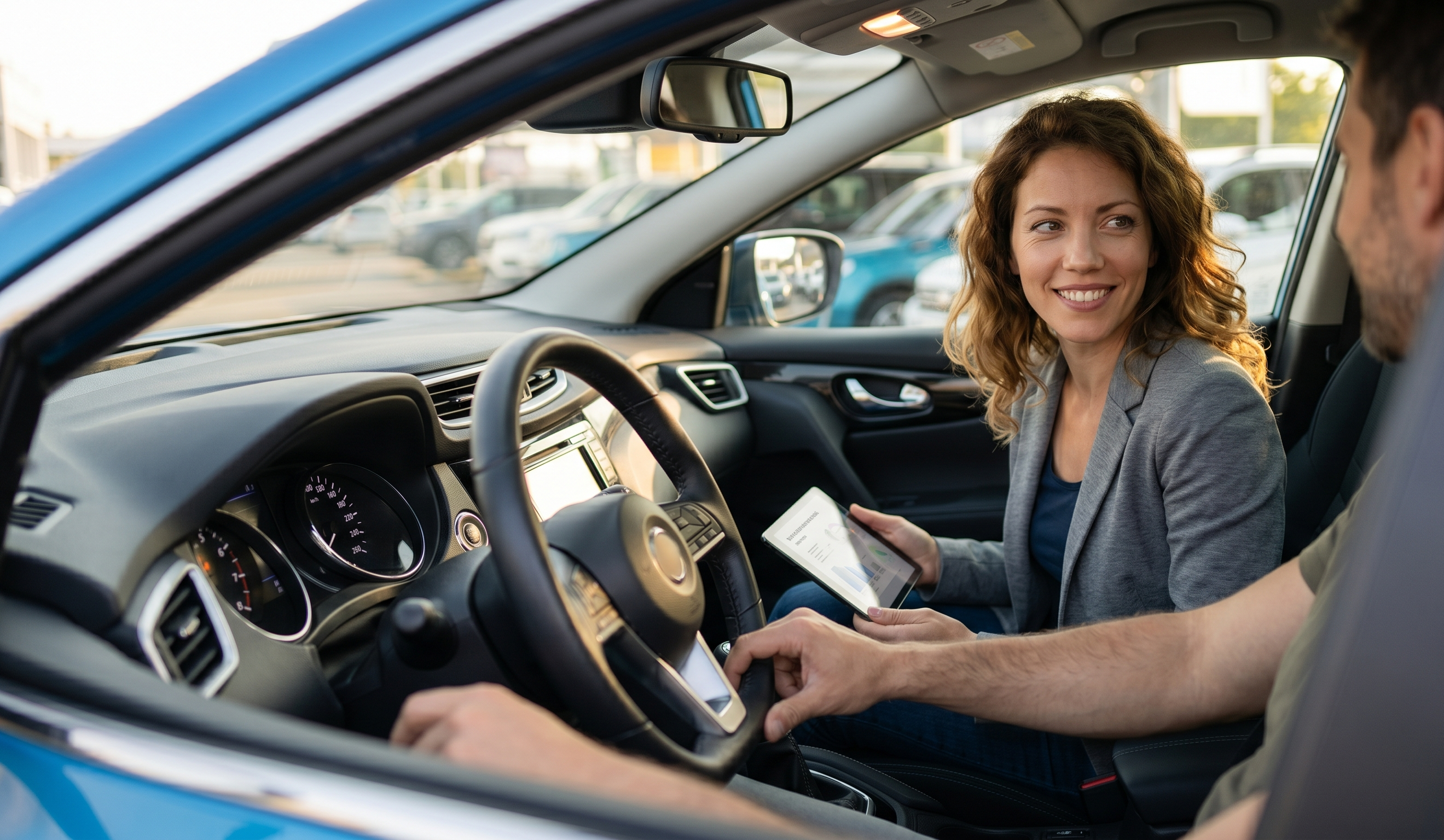
TABLE OF CONTENTS
1. The Most Expensive Thirty Minutes in Automotive Retail
The test drive is the defining moment of the automotive sales process. It is the point at which research becomes experience, where the vehicle the customer has been evaluating on a screen becomes something they can feel, hear, and respond to in real time.
It is also a significant investment by the dealership. Every test drive consumes fuel. It puts mileage and wear on a vehicle that represents a meaningful capital asset. It commits a sales executive to one customer for thirty minutes or more, during which they are unavailable to anyone else. It carries insurance and liability considerations. And it creates an expectation in the customer's mind that the dealership takes their interest seriously enough to invest this resource in them.
All of that investment is made on a single assumption: that the test drive will meaningfully advance the probability of a sale.
When it does not, the cost of that test drive is not just the fuel and the time. It is the full weight of a commercial investment that produced no return. And in most dealerships, the question of why a specific test drive did not convert is one that nobody can answer with any precision because the conversation that happened during those thirty minutes was never captured.
2. What the Test Drive Investment Actually Buys
To understand why test drive conversion matters so much, it helps to be clear about what the test drive is actually supposed to accomplish.
By the time a customer requests a test drive, they have already done substantial research. They know the model. They know the key specifications. They have compared it to alternatives online and possibly visited other dealerships. The test drive is not primarily about product discovery. The customer already knows the product in the abstract.
What the test drive accomplishes, when it goes well, is something more valuable than information transfer. It creates an emotional connection between the customer and the vehicle. The ride quality that feels better than expected. The driving position that suits them perfectly. The sound of the engine at speed. The way the technology responds to their touch. These are experiences that no amount of online research can replicate and that, in the right hands, create a buying conviction that carries the customer through the longer decision-making process that follows.
The test drive also accomplishes something equally important on the relationship side. Thirty minutes in a vehicle together, away from the formal environment of the showroom, is the most natural and unguarded conversation a sales executive will have with a customer throughout the entire sales cycle. When that conversation is handled well, the trust and rapport built during those thirty minutes becomes the foundation that the follow-up phase is built on.
When the test drive fails to create either the emotional product connection or the relational foundation, the investment it represents is not recovered. The customer leaves having experienced the vehicle but without the conviction or the relationship that would carry them through the weeks or months of decision-making ahead.
3. What Is Actually Happening During the Test Drive
The gap between what dealerships assume is happening during a test drive and what conversation intelligence reveals is often significant.
The assumption is that the sales executive is presenting the vehicle effectively, managing the customer's experience of the drive, and building a relationship that supports the eventual sale. In the best cases, that is exactly what happens. In many cases, the reality is more complicated.
Some sales executives use the test drive primarily to deliver a product monologue. They talk through features the customer already researched without pausing to understand how the customer is actually responding to the live experience. The customer is forming real-time impressions and opinions that are highly commercially relevant, and the sales executive is not listening for them because they are focused on their own delivery.
Other sales executives are so focused on being likeable and not appearing pushy that they avoid the commercial purpose of the test drive altogether. The conversation is warm and pleasant but does not surface the customer's concerns, does not deepen their emotional connection to the vehicle, and does not position the sales executive as the trusted expert who should guide the purchase decision.
And in some cases, a concern surfaces during the test drive that the sales executive notices but does not know how to address without disrupting the flow of the conversation. That concern is noted internally and then not adequately addressed in the follow-up, where it becomes the unspoken barrier that keeps the deal from closing.
All of these dynamics are visible in conversation data. None of them are visible to a manager who was not in the vehicle.
4. The Thirty Minutes That Contain More Intelligence Than Any CRM Entry
The conversation that happens during a test drive is unlike any other interaction in the automotive sales cycle. The customer is relaxed and engaged. They are experiencing the product directly. Their reactions are immediate and honest. They ask questions they would not ask in a formal showroom setting. They make comparisons and express preferences that reveal exactly where they are in their decision and what would move them toward or away from a purchase.
A customer who says during the drive that the ride feels smoother than the vehicle they currently own is telling you something important. A customer who asks about the boot space while they are parked at traffic lights is mentally placing the vehicle in the context of their daily life. A customer who mentions that their partner was not sure about the color is revealing that there is a secondary decision maker who needs to be factored into the follow-up strategy.
Every one of these moments is a piece of intelligence that should be shaping every conversation that follows the test drive. In a dealership without conversation intelligence, those moments are heard by the sales executive, partially retained, and incompletely recorded in a CRM note that reads something like "customer liked the drive, still considering".
In a dealership with in-vehicle voice intelligence, those moments are captured in full, analyzed for their commercial significance, and made available to inform every subsequent interaction with that customer.
5. The Patterns That Separate Converting Test Drives From Non-Converting Ones
When automotive voice intelligence analyses large numbers of test drive conversations and correlates them with sales outcomes, specific patterns emerge that consistently distinguish the test drives that convert from the ones that do not.
Converting test drives tend to involve sales executives who ask open questions during the drive rather than delivering a monologue. They make space for the customer's real-time reactions and engage with those reactions specifically rather than continuing with a prepared script. They surface and address concerns in the moment rather than noting them and moving on. And they find at least one moment during the drive to make a genuine, specific connection between what the customer has expressed and why this vehicle is the right choice for their situation.
Non-converting test drives tend to involve either too much talking by the sales executive or too little purposeful conversation at all. The customer's unguarded reactions, which are present in every drive, are not engaged with in a way that builds conviction. The drive is pleasant but does not produce the emotional or relational outcomes that justify the investment.
These patterns are coachable once they are visible. The sales executive who learns, through specific conversation data, exactly where their test drive conversations are falling short can adjust their approach in ways that produce meaningfully better conversion rates.
6. Making the Test Drive Investment Pay
Every dealership wants better test drive conversion. Most approach the challenge through general training about the importance of product knowledge, relationship building, and follow-up discipline. These are valid inputs but they lack the specificity to produce consistent, measurable improvement.
In-vehicle conversation intelligence changes the specificity of what is available for coaching. Instead of general guidance about making the test drive more effective, a manager can say to a sales executive: in the last three test drives, there were moments when the customer expressed genuine enthusiasm about the vehicle and those moments were not engaged with in a way that built on that enthusiasm. Here is what that looked like, and here is what a more effective response to those moments sounds like.
That level of coaching precision is not available from any other source. It can only come from the actual conversation that happened in the vehicle./p>
When test drive conversion improves through evidence-based coaching grounded in real in-vehicle conversation data, the return on the test drive investment improves simultaneously. The fuel, the mileage, the executive time, and the operational overhead of each test drive produces a higher probability of a sale. The cost per converted test drive falls. The revenue generated per test drive rises.
And as the coaching compounds over time, as the patterns that convert become standard practice across the sales team rather than the occasional achievement of a top performer, the improvement in test drive ROI becomes a durable feature of how the dealership operates rather than a one-off gain from a training initiative.
7. The Test Drive Deserves Better Than a CRM Note
The thirty minutes of the test drive represent the single highest-quality commercial intelligence opportunity in the entire automotive sales cycle. The customer is present, engaged, and revealing exactly what they think and feel about the most important purchase decision variable: the direct experience of the vehicle.
That intelligence deserves better than a line in a CRM note and a vague memory in the sales executive's mind.
In-vehicle conversation intelligence gives the test drive the analytical attention it deserves. It ensures that what happens during those thirty minutes does not evaporate when the customer returns the keys but instead becomes the foundation for every conversation that follows.
"Every test drive is an investment. In-vehicle conversation intelligence makes sure that investment pays off."
"Want to find out what is actually happening in your test drive conversations and how to improve your conversion rate from drive to deal?Book a free demo
and we will show you what the in-vehicle intelligence reveals."

About Jinn Insights
Jinn Insights studies what happens in real sales conversations on the retail floor. Our insights come from showroom, test drive and follow-up conversations captured by Jinn and scored from greeting to close.
Share Your Thoughts
Join the conversation and let us know what you think