From Gut Feel to Data-Driven: How Jewellery Brands Are Modernising Their Sales Floor
TABLE OF CONTENTS
1. The Jewellery Industry Is at an Inflection Point
The jewellery industry has always prided itself on tradition. On craftsmanship that spans generations. On relationships built over decades between a store and its community. On the kind of expertise that takes years to develop and cannot be replicated by an algorithm.
That heritage is real and it matters. But it has also created a blind spot.
Because the same instinct that values tradition has sometimes made it harder to embrace the tools that would make those traditions more sustainable. The result is that many jewellery brands, including some of the most respected names in their local markets, are running their sales floors today in essentially the same way they were running them fifteen years ago.
The decisions are still based on the same sources of information. The same gut feel, the same sales reports, the same occasional mystery shopper, the same quarterly review with the team. The tools around the edges have changed. The core intelligence infrastructure has not.
And in a retail environment that is moving faster than it ever has, that gap is starting to matter.
2. What Data-Driven Actually Means on a Jewellery Sales Floor
When people talk about data-driven retail, the conversation tends to default to e-commerce metrics. Click-through rates, conversion funnels, abandoned basket analysis, customer lifetime value calculations. All of that is useful, but none of it describes what is happening in a physical jewellery store.
The data that actually drives performance in jewellery retail is conversation data. It is the information contained in the live, face-to-face interactions between your sales associates and your customers every day. That is where buying decisions are made or lost. That is where your brand promise is delivered or broken. That is where the gap between potential revenue and actual revenue either opens or closes.
Becoming data-driven as a jewellery brand does not mean installing more dashboards or running more reports. It means capturing the intelligence that already exists in your store and using it to make better decisions.
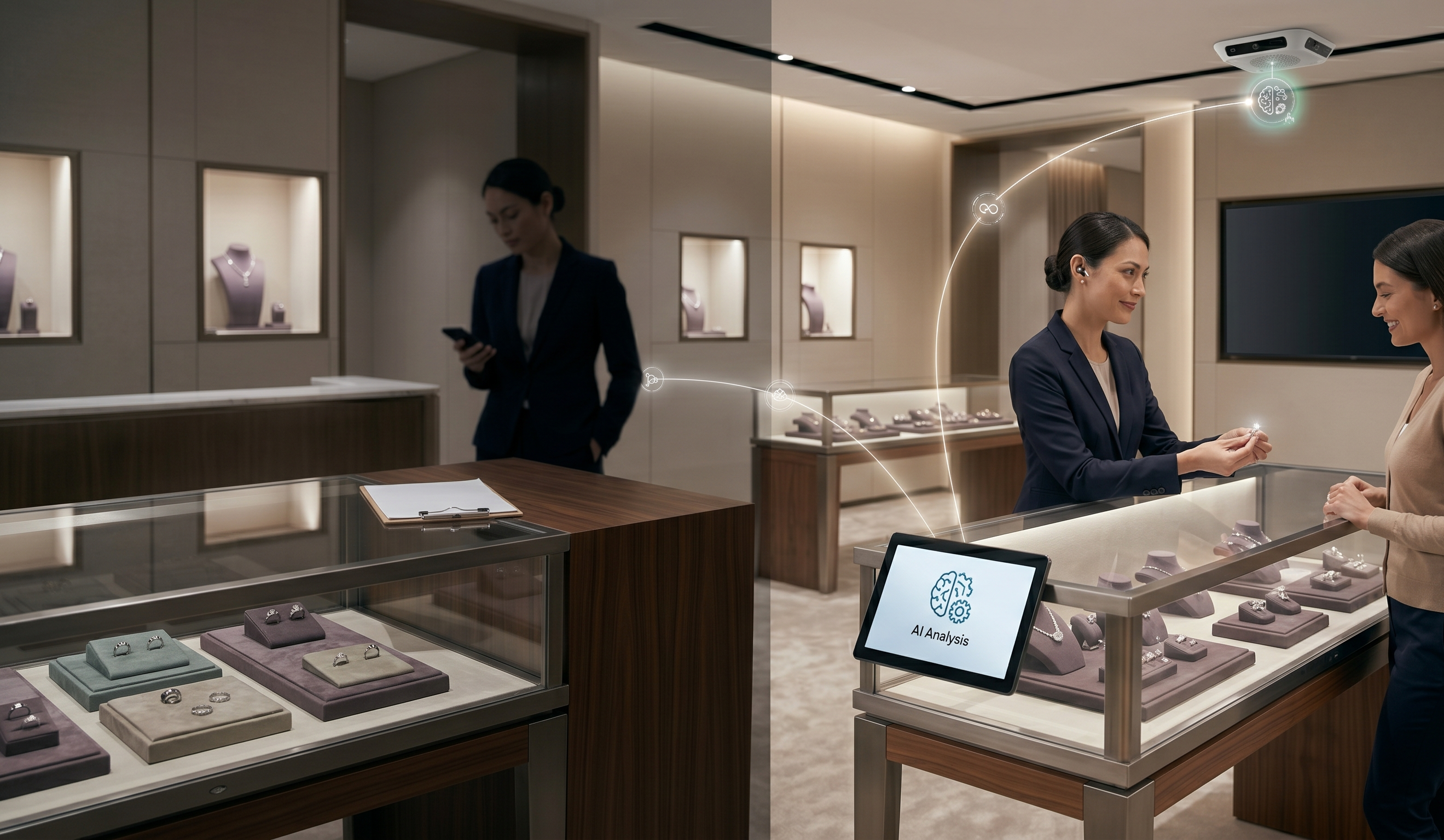
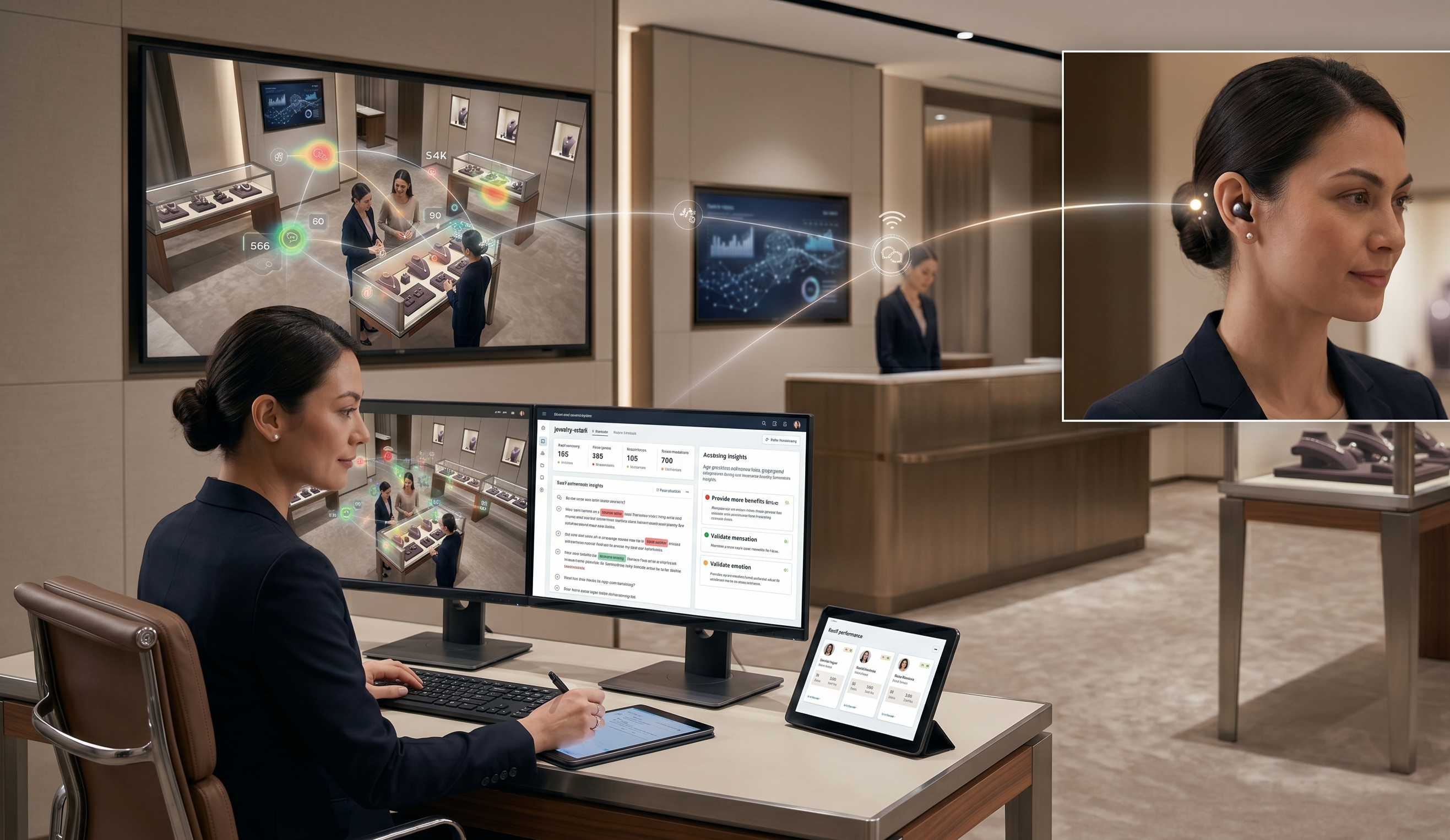
In-store voice intelligence is the technology that makes that possible. It captures, analyses, and structures the conversation data from your sales floor so that the decisions you make about your team, your products, your customer experience, and your marketing are grounded in what is actually happening rather than what you think is happening.
3. The Gap Between What Jewellery Brands Think Is Happening and What Is
One of the most consistently surprising aspects of deploying in-store conversation intelligence is the gap it reveals between a store owner's assumptions about their floor and the reality the data surfaces.
The owner who believes their team is consistently asking good discovery questions discovers that discovery is skipped in more than half of all customer interactions. The manager who thinks their top associate handles price objections confidently finds out that price concerns are the most common point of conversation breakdown for that associate. The brand that prides itself on a warm, personal customer experience finds that a significant proportion of customer interactions are transactional, rushed, and short on the kind of emotional connection that drives high-value purchases.
None of these discoveries reflect badly on the people involved. They reflect the limits of managing a retail floor without access to what is actually happening on it. Assumptions fill the gap where data should be. And assumptions, however well-intentioned, are not a reliable foundation for running a modern jewellery business.
4. How Forward-Thinking Jewellery Brands Are Making the Shift
The jewellery brands that are modernizing their sales floors are not doing so by abandoning what makes them great. They are not replacing human expertise with technology or sacrificing the warmth and craftsmanship that define their brand. They are adding an intelligence layer that makes everything they already do work better.
Here is what that modernization looks like in practice.
• They are building coaching programs on evidence: Rather than training based on what senior staff believe works, forward-thinking jewellery brands are using conversation data to build coaching programs rooted in what actually works in their specific store with their specific customers. The training is sharper, more targeted, and produces measurable improvement faster.
• They are making inventory decisions based on real demand: Instead of relying primarily on historical sales data and trade show impressions, modern jewellery brands are feeding customer conversation data into their buying process. They know what customers are asking for that they do not currently stock, and they are filling those gaps before a competitor does.
• They are connecting marketing spend to in-store outcomes: Rather than measuring marketing performance purely on digital metrics, data-driven jewellery brands are capturing the attribution information that exists in their customer conversations. They know which campaigns are genuinely driving footfall and which are generating impressions without generating sales.
• They are delivering consistent brand experiences: By using conversation intelligence to establish and maintain a consistent standard of customer interaction across all associates and locations, modern jewellery brands are ensuring that every customer who walks through their door receives the experience their brand promises, regardless of who serves them.
Each of these failure modes is a customer conversation pattern that can be identified, measured, and corrected but only if you can see the conversation.
5. The Brand Case for In-Store Intelligence
There is a brand argument for in-store voice intelligence that goes beyond operational efficiency, and it is one that jewellery brand owners should consider carefully.
Your brand is not primarily defined by your logo, your window display, or your marketing materials. It is defined by the experience customers have when they interact with your people. Every conversation on your sales floor is a brand moment. It either reinforces what your brand stands for or it quietly undermines it.
A jewellery brand that consistently delivers warm, knowledgeable, personalized customer interactions builds a reputation that compounds over time. Customers return. They refer their friends. They trust the brand with their most meaningful purchases. That reputation is your most durable competitive asset.
But building that reputation requires consistency. And consistency requires knowing what is actually happening in every customer interaction, not just the ones that end in a purchase or the ones that happen to be observed.
In-store voice intelligence gives jewellery brands the visibility they need to protect and strengthen their brand at the moment that matters most: the conversation between associate and customer on the sales floor.
6. Modernisation Does Not Mean Losing What Makes You Special
The concern that some jewellery retailers have about technology adoption is understandable. There is a fear that introducing AI into the sales floor will make the experience feel less human, less personal, less like the kind of high-touch jewellery retail that has always been the sector's strength.
That fear is worth addressing directly.
In-store voice intelligence does not change the conversation. It does not interrupt the interaction between associate and customer. It does not replace the human judgement and warmth that make jewellery retail what it is. It operates in the background, capturing and analysing what happens, and delivering insights to managers and owners after the fact.
The customer experience on your floor remains exactly as human and personal as your team makes it. The difference is that you now have the information to make sure that experience is consistently as good as it can be.
The craftsmanship that defines your brand does not become less valuable when it is supported by better intelligence. It becomes more reliably expressed.
7. The Jewellery Brands That Will Lead the Next Decade
The jewellery brands that will be most successful over the next ten years are the ones that figure out how to combine what has always made the sector great with the intelligence tools that modern retail demands.
They will know their customers more deeply than their competitors because they are capturing and learning from every conversation rather than a fraction of them. They will coach their teams more effectively because their training is grounded in evidence rather than assumption. They will stock the right products because their buying decisions are informed by real demand signals. And they will invest their marketing budgets more confidently because they know what is actually driving customers into their stores.
That combination of heritage and intelligence is not a contradiction. It is the definition of a modern jewellery brand.
"The brands that know what is happening on their sales floor will always outperform the ones that are guessing."
"Want to see what data-driven looks like for your jewellery store?Book a free demo
and we will show you the intelligence your sales floor is already generating."

About Jinn Insights
Jinn Insights studies what happens in real sales conversations on the retail floor. Our insights come from showroom, test drive and follow-up conversations captured by Jinn and scored from greeting to close.
Share Your Thoughts
Join the conversation and let us know what you think