The Customer Experience Is Happening on Your Sales Floor: Here Is How to Capture and Improve It
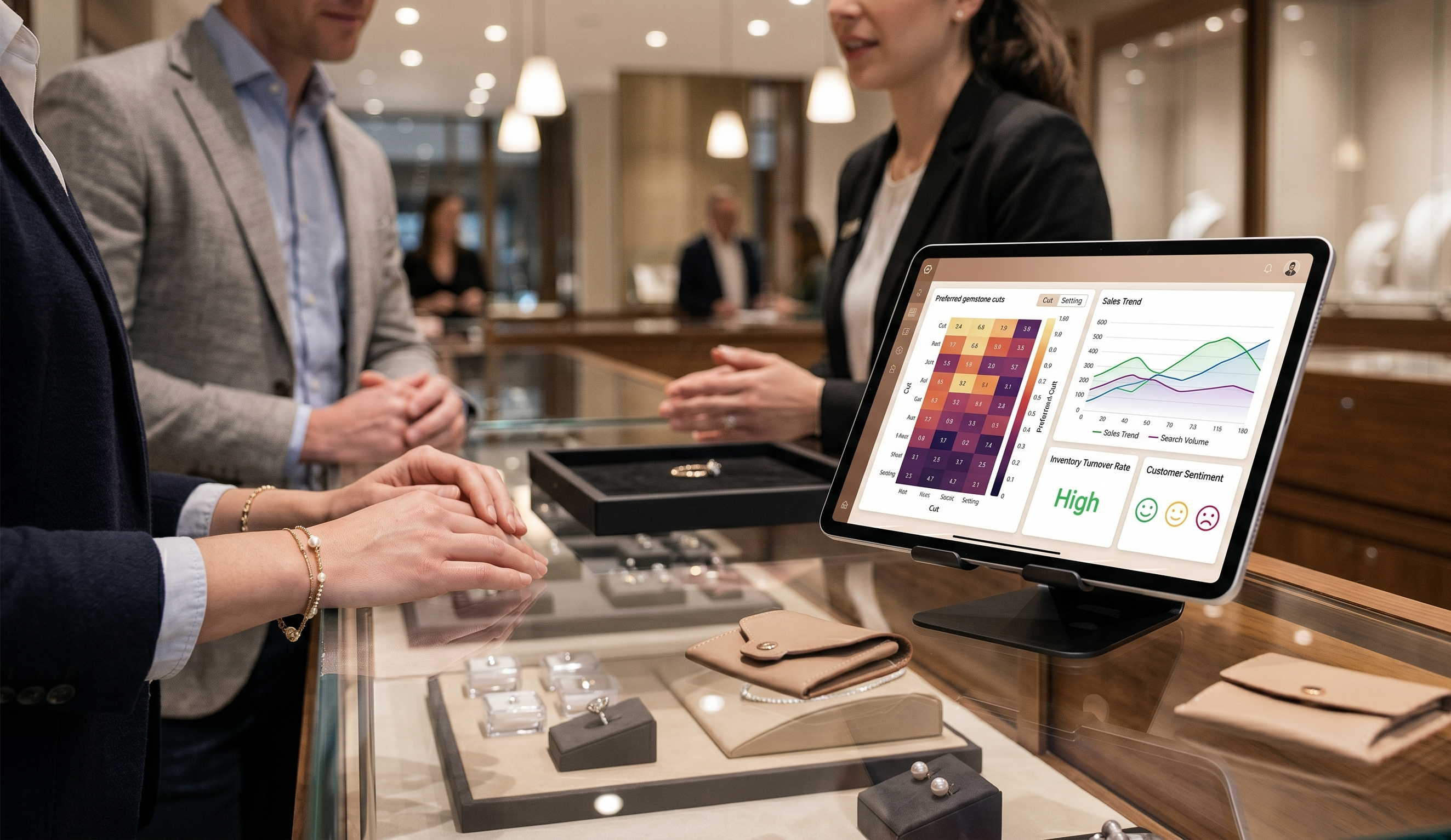
TABLE OF CONTENTS
1. The Promise Your Brand Makes and the Moment It Gets Kept or Broken
Every jewellery brand makes a promise. It lives in the way the store looks. The quality of the pieces on display. The tone of the marketing. The reputation built over years in a community. The story told about what kind of experience a customer can expect when they walk through the door.
That promise is made across every touchpoint a customer has with your brand before they visit. And it is kept or broken in a single place. The conversation on your sales floor.
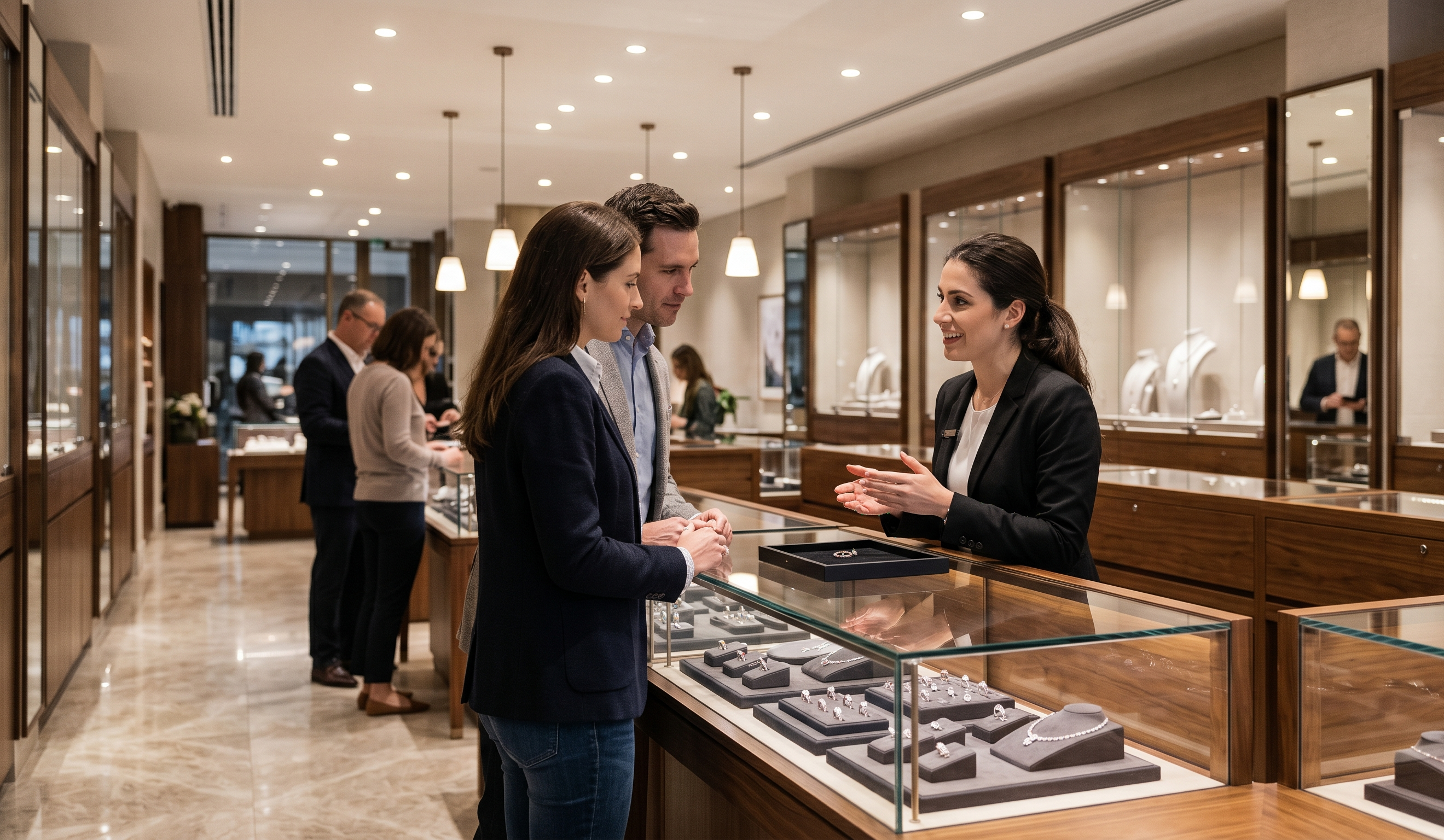
Not the window display. Not the website. Not the Instagram post that brought them in. The moment a customer walks into your jewellery store and a sales associate begins to engage them, that is where everything your brand has promised either becomes real or reveals itself as aspiration that the reality does not yet match.
For most jewellery retailers, that moment is completely unmonitored. The promise is made with great care. The moment it is tested is invisible.
2. What Customer Experience Actually Means in Jewellery Retail
Customer experience is a term that gets used broadly in retail, often in ways that focus on the peripheral rather than the central. Store layout. Lighting. Background music. Refreshments. Packaging. These things contribute to the experience. They are not the experience.
In jewellery retail, the customer experience is fundamentally relational. It is the quality of human connection between your associate and your customer. The degree to which the customer feels genuinely understood rather than processed. The confidence they develop in your associate's expertise. The warmth of the interaction. The sense that they are being helped to find the right piece for a meaningful moment in their life rather than being sold to.
When that relational experience is excellent, customers do not just buy. They remember. They return. They tell people. They associate your brand with one of the most meaningful purchases they have ever made, and that association stays with them for years.
When it is mediocre, they may still buy, particularly if the product is right and the price is acceptable, but the experience does not create loyalty. It does not generate referrals. It does not build the kind of long-term customer relationship that sustains a jewellery brand across decades. The difference between those two outcomes is almost entirely determined by the quality of the conversation.
3. The Customer Experience You Think You Are Delivering Versus the One You Are
One of the most consistent findings when jewellery retailers first deploy in-store voice intelligence is the gap between the customer experience the store believes it is delivering and the experience the conversation data reveals.
This is not usually a story of poor service or unprofessional conduct. It is more subtle than that. It is associates who are technically competent but emotionally disconnected. Conversations that are informative but not warm. Interactions that cover the necessary ground but do not create the sense of genuine personal attention that makes jewellery retail memorable.
It is the discovery phase that gets skipped when the floor is busy. The closing attempt that comes too early before the customer has had time to fall in love with a piece. The response to an objection that is technically accurate but feels dismissive. The interaction that is perfectly pleasant and completely forgettable.
None of these are dramatic failures. But they are the difference between a customer experience that creates loyalty and one that does not. And they are happening across sales floors every day in stores that genuinely believe they are delivering something special. Conversation intelligence makes that gap visible for the first time. Not to criticize, but to close it.
These are the questions that determine where your marketing budget should go next month. And for the first time, you have the data to answer them from your own customer conversations.
4. How In-Store Voice Intelligence Captures the Customer Experience
Capturing the customer experience has historically meant surveys, mystery shoppers, online reviews, and the occasional direct feedback that customers choose to share. Each of these methods captures something real. But each of them also has significant limitations.
Surveys capture the experience of customers who choose to respond, which is a small and self-selected fraction. Mystery shoppers observe a handful of interactions per month, often in ways that associates can detect, which changes the behavior being observed. Online reviews reflect the extreme ends of the experience spectrum, the customers who were delighted enough to praise or disappointed enough to complain, rather than the broad middle where most interactions sit.
None of these methods give a jewellery retailer a complete, continuous, unfiltered picture of what the customer experience actually looks like across every interaction every day.
In-store voice intelligence does exactly that. Every customer conversation is captured and analyzed. The platform assesses the quality of the relational interaction, the warmth and personalization of the engagement, the depth of the discovery process, the handling of the customer's concerns, and the overall arc of the conversation from greeting to conclusion.
The result is a continuous, comprehensive picture of the customer experience as it is actually being delivered, not as it is occasionally observed or periodically surveyed.
5. What Capturing the Experience Reveals
When jewellery retailers begin accessing in-store customer experience data from their conversation intelligence platform, several consistent patterns emerge.
• Experience quality varies more than expected across associates: The customer who engages with your most experienced associate has a genuinely different experience from the one who engages with your newest team member. That gap is wider than most store owners realize, and it is wider than it needs to be once the coaching infrastructure to close it is in place.
• The quality of the experience drops during busy periods: When the floor is active and associates are stretched, the discovery phase shortens, the emotional connection weakens, and the interaction becomes more transactional. Customers during busy periods are often having a materially worse experience than customers during quieter times, despite the store feeling more vibrant and successful.
• The moments that create the strongest customer experiences are identifiable and repeatable: Conversation analysis surfaces the specific interactions, the questions asked, the stories told, the moments of genuine connection, that consistently produce the highest customer satisfaction signals. Those moments are not random. They are the product of specific conversational behaviors that can be learned and made consistent across the team.
• Recovery from difficult moments varies significantly: When a customer raises a concern, expresses disappointment, or pushes back on a price, the quality of the associate's response varies enormously. Some associates handle these moments in ways that strengthen the relationship. Others handle them in ways that create distance. Knowing which is which, and coaching accordingly, has a direct impact on both conversion and experience quality.
6. Building a Consistent Customer Experience Across Every Interaction
The goal of using in-store voice intelligence to improve customer experience is not to standardize the interaction into something scripted and mechanical. It is the opposite.
The best jewellery retail customer experiences are warm, personal, and genuinely responsive to the individual customer. They feel anything but scripted. But they are also consistent in the ways that matter: in the depth of attention given to understanding what the customer is looking for, in the quality of the expertise brought to bear on helping them find it, in the warmth and care with which even difficult moments are handled.
Building that kind of consistent excellence requires knowing what excellent looks like in your specific store, with your specific customers. Conversation intelligence provides that knowledge by identifying the interactions that produce the strongest customer experience outcomes and making the behaviors behind those interactions visible, teachable, and transferable.
The standard your best associate delivers on her best day becomes the standard the whole team delivers every day. Not because individuals are homogenized, but because the core qualities of an excellent jewellery retail interaction are understood, valued, and coached consistently across the team.
7. The Experience That Builds a Brand Over Time
Jewellery retail brands are not built by marketing alone. They are built interaction by interaction, conversation by conversation, on the sales floor every day.
Each customer who walks into your store and has an experience that makes them feel genuinely understood and well-served becomes a part of your brand's foundation. They return. They bring their partners and their children. They recommend you to people they care about when those people are about to make the kinds of purchases that matter.
Each customer who has a merely adequate experience passes through without leaving much behind. They may not have a negative impression. But they do not carry your brand forward either.
The difference between those two outcomes, multiplied across every customer interaction in your store over years, is the difference between a jewellery brand with a genuinely loyal customer base and one that is perpetually dependent on acquiring new customers to replace the ones it failed to retain.
In-store voice intelligence gives you the tools to understand, protect, and continuously improve the quality of the experience that determines which of those two paths your brand is on.
8. Closing the Loop: From Invisible to Excellent
This final thought is worth sitting with. The customer experience in your jewellery store is already happening. It is happening right now, on your floor, in conversations you cannot hear and interactions you cannot observe. It is being shaped by the quality of your team, the depth of their training, and the consistency with which they bring their best to every customer.
In most jewellery stores, that experience remains invisible to the people responsible for improving it. It is hoped for rather than known. Assumed to be good rather than confirmed. Managed through observation and feedback that captures a fragment of what is actually happening.
In-store voice intelligence closes that loop. It makes the invisible visible. It turns hope into knowledge. It gives jewellery retailers what they have always needed and never had: a complete, continuous, evidence-based understanding of the experience their customers are actually having on the floor every day. That understanding is not the end of the journey. It is the beginning of a better one.
"The customer experience your jewellery brand promises is delivered in conversation. In-store voice intelligence makes sure you know how well that promise is being kept."
"Want to understand what the customer experience in your jewellery store actually looks like across every interaction?Book a free demo
and we will show you what your conversation data reveals."

About Jinn Research
Jinn Research studies what happens in real sales conversations on the retail floor. Our insights come from showroom, test drive and follow-up conversations captured by Jinn and scored from greeting to close.