Why Automotive Dealerships Lose Sales They Should Have Closed: The Conversation Gap Between Test Drive and Purchase

TABLE OF CONTENTS
1. The Sale That Was Already There
There is a particular kind of lost deal in automotive retail that is more frustrating than any other. Not the deal that was never really on the table. Not the customer who was browsing without any real intention to buy. Not the prospect who was clearly going to choose a competitor from the moment they walked in.
The most frustrating lost deal is the one that was there. The customer who took the test drive. Who asked detailed questions about financing. Who discussed delivery timelines and color options. Who told the sales executive they were seriously considering the vehicle. Who, by every reasonable measure of purchase intent, was close to making a decision.
And then chose someone else.
Every dealership has deals like this. Most dealerships have more of them than they realize. And in almost every case, the reason those deals were lost is not what the dealership assumes it was.
2. What Dealerships Assume and What Is Actually True
When a deal is lost after a test drive, the explanation that surfaces most often in a dealership debrief is that the competitor offered a better price. Sometimes that is true. But research into automotive purchase decisions consistently shows that price is rarely the primary reason a customer chooses one dealership over another when the product being considered is comparable.
Customers choose dealerships they trust. Dealerships where they felt genuinely understood rather than managed. Dealerships where the sales conversation felt like a collaboration rather than a transaction. Dealerships where their specific concerns were heard and addressed rather than noted and moved past.
When a customer chooses a competitor after a test drive at your dealership, it is more often because something in the conversation failed to build the trust and connection that would have made them stay than because the competitor's price was materially lower.
That is an uncomfortable conclusion for many dealership teams. It is also an actionable one. Because if the loss was a conversation failure rather than a price failure, it is something that can be identified, understood, and corrected. A price war is hard to win. A conversation quality gap is something you can close.
3. The Three Conversations Where Automotive Deals Are Lost
When in-showroom and telephonic voice intelligence analyses the full conversation arc of deals that were lost after a test drive, three specific conversation moments emerge where the outcome was most often determined.
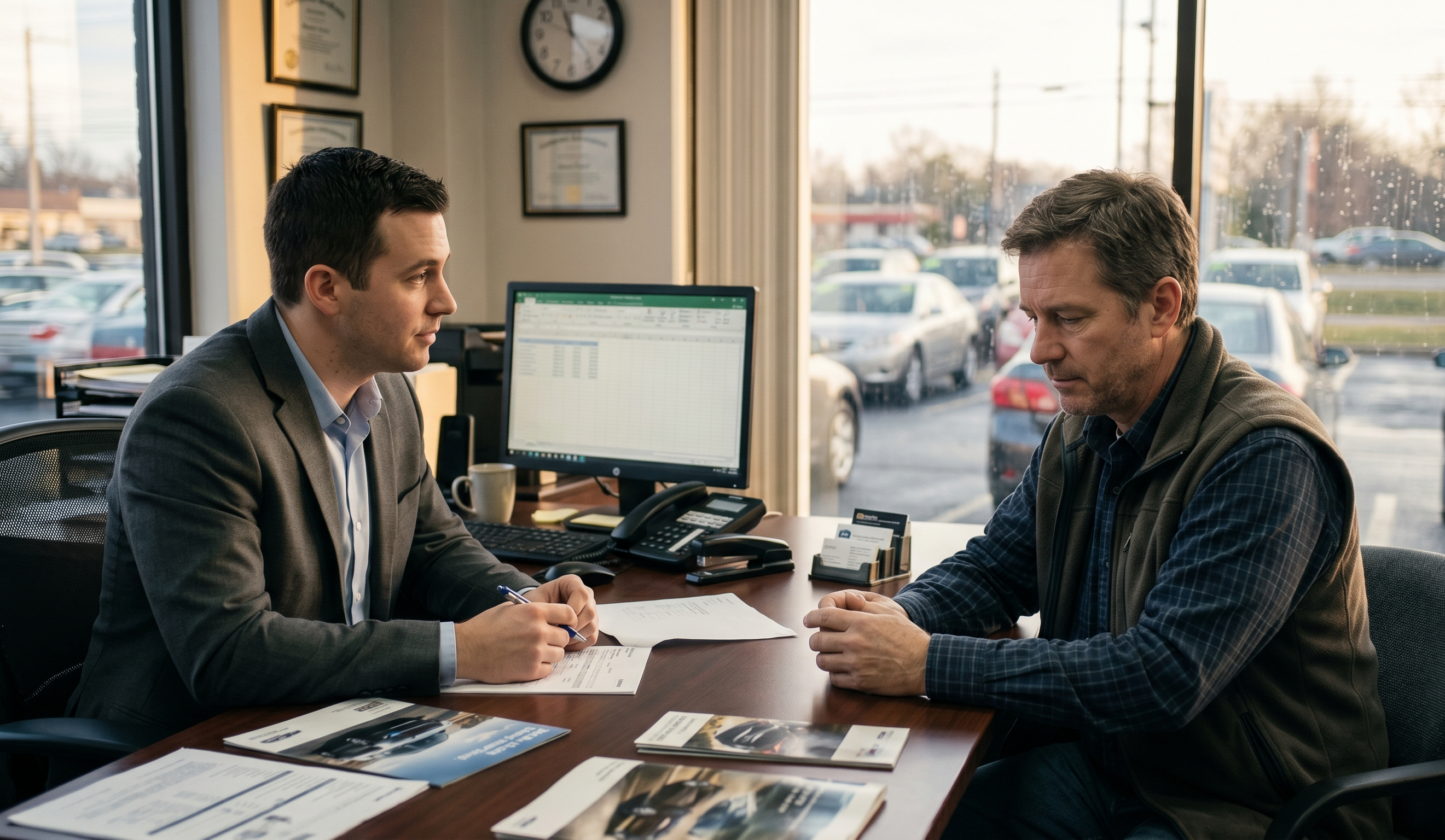
• The first conversation: the showroom visit before the test drive: This is where the foundation of the relationship is either built or not built. A customer who arrives at an automotive showroom has typically done significant research. They know the vehicle. They know the variants. They may know the pricing better than the sales executive who greets them. What they do not know is whether this dealership and this sales executive are the right people to guide them through one of the most significant purchases they will make. That assessment begins in the first few minutes of the showroom conversation and it is shaped almost entirely by whether the sales executive demonstrates genuine understanding of the customer's specific situation rather than defaulting to a product presentation the customer has already researched online. Deals are lost in this first conversation when the sales executive fails to listen before they speak. When they present features the customer already knows about rather than asking questions that surface what the customer actually cares about. When they treat the customer as a prospect to be processed rather than a person with a specific set of needs, concerns, and circumstances that deserve genuine attention. That failure does not end the interaction. The customer is still there. They still take the test drive. But the trust deficit created in those first minutes is carried into everything that follows, and it makes the deal harder to close from that point forward.
• The second conversation: inside the vehicle during the test drive: The test drive is the most emotionally significant moment in the automotive sales cycle. The customer is experiencing the product directly. Their responses are immediate, genuine, and often unguarded. This is the moment when the gap between researched knowledge and real-world experience becomes apparent, in both directions. Sometimes the vehicle exceeds the customer's expectations and the test drive creates genuine buying enthusiasm that a skilled sales executive can build on. Sometimes the experience surfaces a concern that the research did not reveal, a ride quality that does not feel right, a visibility issue, a feature that works differently than expected. The deals that are lost because of what happens during the test drive are almost always lost because the sales executive failed to read and respond to what the customer was expressing in real time. The concern that surfaced during the drive was not acknowledged and addressed. The enthusiasm that peaked at a particular moment was not recognized as a closing opportunity. The comparison the customer made spontaneously to another vehicle they had tested was not engaged with in a way that would have resolved the competitive consideration. The test drive conversation contains more commercial intelligence about where the customer is in their decision than any other single interaction in the sales cycle. In most dealerships, that intelligence is heard by one sales executive in the moment and then effectively lost.
• The third conversation: the follow-up calls after the test drive.: This is where the majority of deals that were close to closing are finally lost. Not because the customer made a definitive decision to go elsewhere, but because the follow-up conversations failed to give them a compelling reason to move forward with your dealership. The follow-up call that does not address the customer's actual concerns is not neutral. It is a mild negative. It signals to the customer that the sales executive either did not listen carefully during the test drive or does not remember what was discussed. Either message undermines the trust that the showroom visit was supposed to build. The follow-up call that is simply a check-in without a clear purpose is similarly ineffective. A customer who is genuinely deliberating needs something from each conversation that moves them closer to a decision. Information that addresses an open question. Reassurance about a specific concern. A concrete update about inventory availability or financing options. Without that substance, the call leaves the customer exactly where they were before, and the sales cycle extends by default.
4. The Intelligence That Would Have Changed the Outcome
In each of the three conversations described above, the intelligence that would have prevented the loss was present. It existed in what the customer said.
In the first showroom conversation, the customer revealed what they actually cared about. What their primary concern was. What would make them feel confident enough to commit.
In the test drive, they revealed how they genuinely felt about the vehicle and what residual doubts remained after experiencing it directly.
In the follow-up calls, they revealed where they were in their decision and what they needed to hear to move forward.
In most dealerships, none of that intelligence is captured in a form that can be acted on systematically. The sales executive carries some of it in their memory. The CRM holds status updates and contact dates. But the actual content of what was said, the specific words the customer used, the concerns they expressed, the signals they sent, is effectively invisible to everyone in the dealership except the individual who was present for each conversation.
That is the conversation gap. And it is why deals that should have closed end up being lost to a competitor who may not have offered a meaningfully better product or a materially lower price but who happened to have a conversation that addressed the customer's concerns more completely.
5. Closing the Gap With Conversation Intelligence
An automotive voice intelligence platform closes the gap by making the full conversation record of every customer relationship available to the people who need it.
The sales manager who reviews a deal before a follow-up call can see exactly what was said during the test drive and what concerns were expressed. The follow-up call can be prepared around those specific concerns rather than being a generic contact event.
The sales executive who is handed a deal previously managed by a colleague who has left can review the full conversation history and understand the customer's situation without having to ask them to repeat themselves.
The coaching conversation about a lost deal changes from speculation about what might have gone wrong to a specific analysis of what was actually said and where the conversation failed to maintain momentum.
And over time, as the patterns in lost deals become visible across hundreds of analyzed conversations, the coaching programs that address those patterns become precisely targeted at the specific failures that are costing the dealership most.
The deals that should have closed will not all be saved. Some losses are genuinely beyond the dealership's control. But the losses that are rooted in conversation failures, in missed signals, unaddressed concerns, and generic follow-up calls that fail to move the customer forward, are recoverable. And in most dealerships, those are the majority.
"The sale was already there. The conversation is what determined whether it stayed."
"Want to find out which of your lost deals were conversation failures and how to prevent them from recurring?Book a free demo
and we will show you what your conversation data reveals about the deals you should have closed."

About Jinn Research
Jinn Research studies what happens in real sales conversations on the retail floor. Our insights come from showroom, test drive and follow-up conversations captured by Jinn and scored from greeting to close.