Three Conversations, One Customer, One Deal: How Voice Intelligence Connects the Showroom Floor, the Test Drive, and the Follow-Up Call
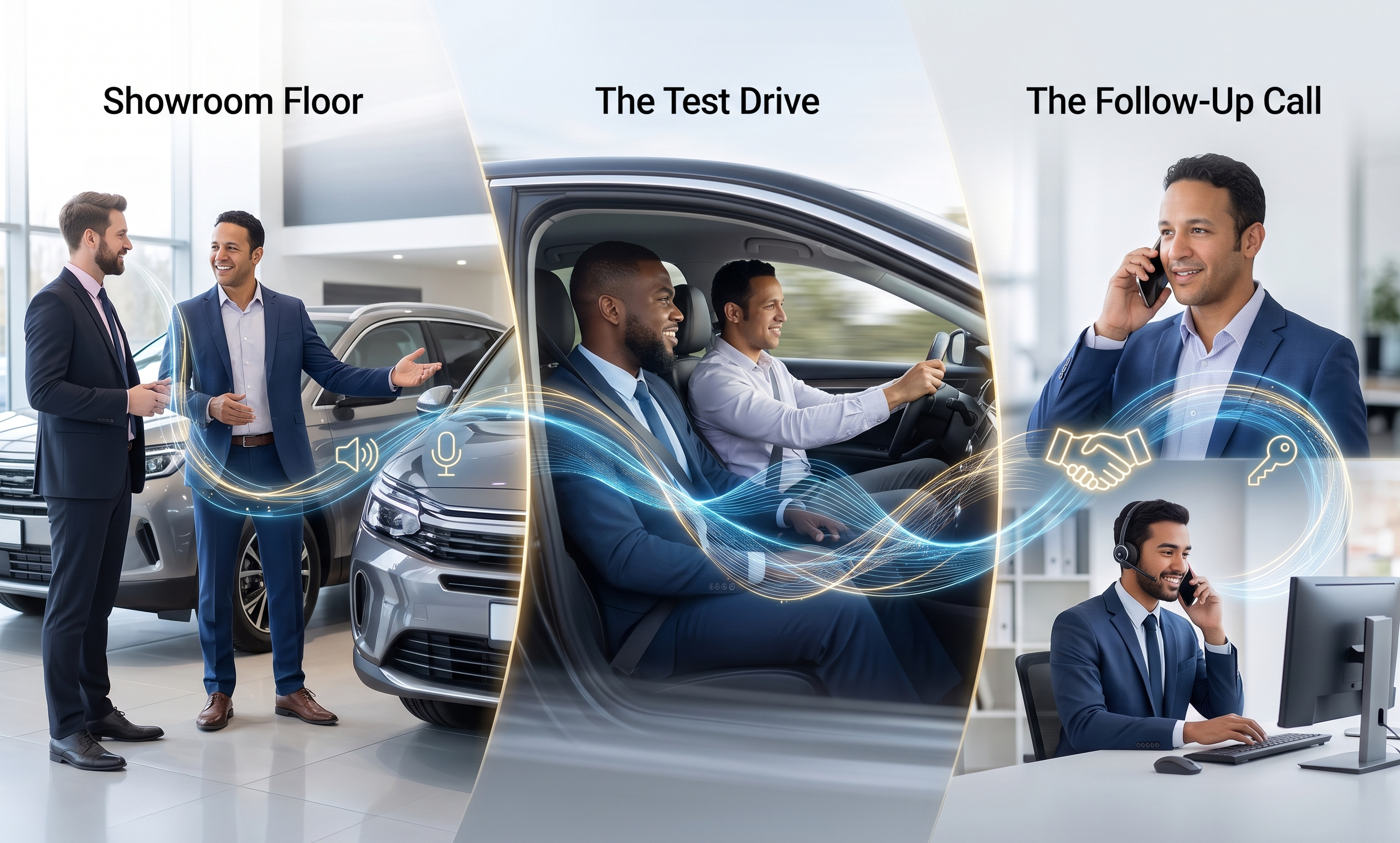
TABLE OF CONTENTS
1. The Customer Relationship That Spans Three Very Different Conversations
Every automotive sale is the product of multiple conversations across multiple settings over an extended period of time. That is what makes automotive retail fundamentally different from almost every other retail category.
A customer who buys a vehicle from your dealership has not made a single decision in a single moment. They have moved through a series of interactions, each with its own character, its own emotional register, and its own commercially critical moments. And the quality of the connection between those interactions, how well each conversation builds on what was revealed in the one before it, is what determines whether the journey ends in your showroom or in a competitor's.
Most dealerships manage those interactions as separate events. The showroom visit is one thing. The test drive is another. The follow-up calls are another still. Each is handled by the same sales executive in theory, but in practice the intelligence from each conversation rarely flows effectively into the next. The customer who revealed something important during the test drive is called a week later by an executive who is working from a CRM note rather than from the actual conversation that took place.
Voice intelligence changes that by connecting all three conversations into a single, continuous, analyzed record of the customer relationship. What was said in the showroom informs the test drive. What was revealed during the test drive shapes every follow-up call. What the customer says in follow-up calls updates the picture of where they are and what they need to hear next. That connection is not a technical convenience. It is a fundamental change in how dealerships are able to understand and manage the customer journey from first visit to signed deal.
2. Conversation One: The Showroom Floor
The showroom visit is where the customer relationship begins in person. By the time a customer walks into your dealership, they have typically spent days or weeks researching online. They have read reviews, watched videos, compared specifications, and formed strong initial opinions about the vehicle they are considering.
What they have not yet formed is an opinion about your dealership and your sales executive. That assessment begins the moment a sales executive engages them and it is shaped almost entirely by the quality of the conversation that follows.
The commercially important intelligence from the showroom conversation falls into several categories. There is the discovery intelligence, what the customer reveals about their specific situation, their reasons for buying, their timeline, their budget reality, and the decision factors that matter most to them. There is the competitive intelligence, what other vehicles or dealerships they have considered and what impressions they have formed. There is the relationship intelligence, how the customer responds to the sales executive, whether trust is beginning to build or whether there is friction. And there is the objection intelligence, the concerns and hesitations that surface in the first conversation and that will need to be addressed somewhere in the sales cycle.
All of that intelligence is generated in the showroom. In most dealerships, it is summarized imperfectly in a CRM note and carried imprecisely in the sales executive's memory. In a dealership with voice intelligence, it is captured completely, analyzed systematically, and made available to shape every conversation that follows.
3. Conversation Two: The Test Drive
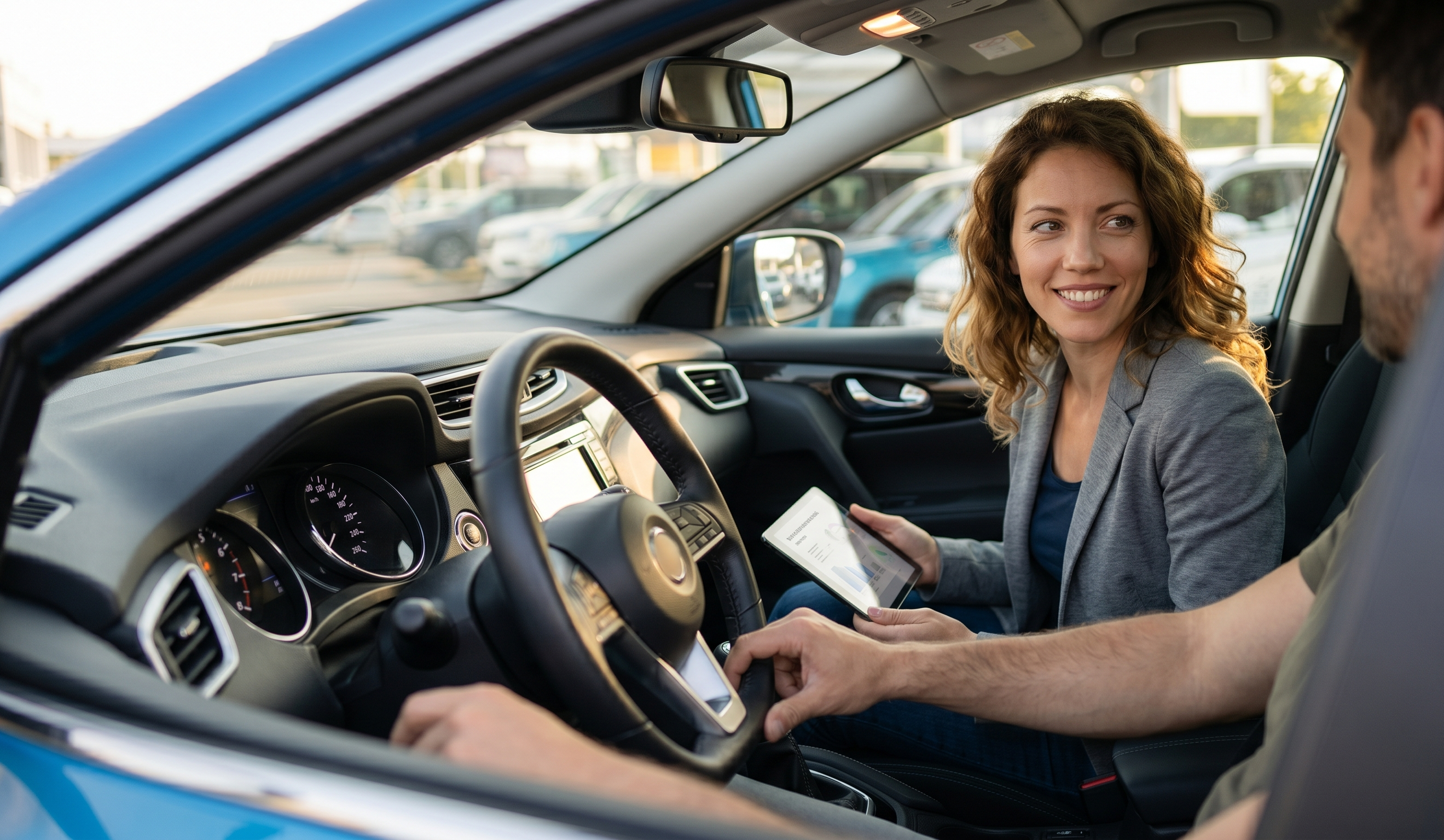
The test drive is where the customer relationship moves from professional to personal. Thirty minutes in a vehicle together, away from the structured environment of the showroom, changes the nature of the interaction in ways that are commercially significant.
Customers are more relaxed during the test drive. They are engaged with the product directly and their responses are immediate and genuine. They ask questions they would not ask in a formal setting. They make comments that reveal their real feelings about the vehicle rather than the carefully considered opinions they expressed during the showroom walk-around.
The intelligence that the test drive conversation contains is qualitatively different from showroom intelligence. It is more emotionally immediate, more spontaneous, and in many ways more revealing of where the customer actually is in their decision.
A customer who says nothing but positive things in the showroom but expresses a specific concern about the driving position during the test drive has just revealed something the sales executive could not have known before they got in the vehicle. A customer who spontaneously mentions a competitor's vehicle they tested last weekend and how this vehicle compares has just told the sales executive exactly what competitive ground needs to be covered in the follow-up.
When test drive intelligence is captured and connected to the showroom intelligence that preceded it, the picture of the customer's decision-making process becomes significantly more complete. The sales executive who reviews both before making the first follow-up call is in a fundamentally different position from one who is working from a CRM note that reads "liked the car, considering options."
4. Conversation Three: The Follow-Up Call
The follow-up call is where most automotive deals are ultimately won or lost. It is also the conversation channel that receives the least analytical attention in most dealerships, despite being the one that operates over the longest period and involves the most customer interactions.
The follow-up phase can last days, weeks, or months. During that time, the customer's situation is not static. Their financial position may change. A family member's opinion may shift. A competitor may make an offer. A specific concern from the test drive may have grown rather than diminished. An auspicious date for the purchase may be approaching. The vehicle they want may have become available in stock.
Each of these changes is potentially reflected in what the customer says during a follow-up call. The sales executive who is listening carefully and knows what to listen for will pick up these signals and respond to them in ways that move the deal forward. The sales executive who is making a generic contact call without that attentiveness will have a pleasant conversation that leaves the customer in exactly the same place.
When follow-up call conversations are captured and connected to the showroom and test drive intelligence that preceded them, several things become possible that were not before. The sales executive can prepare for each call with a complete picture of everything the customer has said across the full relationship, not just the last interaction. The manager reviewing the pipeline can see not just that a deal is open but exactly where it is in the customer's decision process based on the language of the most recent conversation. And the pattern of which call approaches actually move deals forward, across dozens of analyzed conversations over time, becomes visible and teachable.
5. What Connection Between Channels Actually Produces
The commercial value of connecting intelligence across all three conversation channels is greater than the sum of the individual parts. Here is why.
Each conversation channel reveals a different dimension of the customer's decision. The showroom conversation reveals their stated priorities and initial concerns. The test drive reveals their emotional and experiential response to the product. The follow-up calls reveal how their position evolves over time as they process the experience and navigate the practical factors involved in the purchase.
No single channel gives the complete picture. A dealership that only analyses showroom conversations knows what customers say when they are in a formal setting but not how they feel when they are actually experiencing the vehicle. A dealership that captures test drives but not follow-up calls has the emotional intelligence from the drive but cannot see how that emotion evolves or erodes during the consideration phase.
When all three channels are connected, the picture becomes complete. The customer who was enthusiastic during the test drive but whose follow-up conversations are showing signs of hesitation is identifiable early enough to intervene effectively. The customer whose showroom concerns were never fully addressed and who is now asking the same questions to a competitor can be identified from the pattern of their follow-up language before the deal is lost.
That early visibility is what connected channel intelligence provides. It turns the management of the sales pipeline from a retrospective exercise in understanding what happened into a prospective one focused on what needs to happen next.
6. The Sales Executive Who Knows the Full Story
One of the most practical benefits of connected conversation intelligence is what it does for the individual sales executive managing an active pipeline.
Consider the experience of making a follow-up call without connected intelligence. The executive looks at the CRM, sees that the last call was two weeks ago and the note says the customer is still considering, and makes a call that is essentially a fresh start. They do not know what the customer said during the test drive. They do not remember the specific concern that surfaced in the second follow-up call. They are reconnecting with a customer whose full story they do not have.
Now consider the same executive making the same call with access to the full conversation record. They know what the customer said during the showroom visit about their timeline and budget. They know what the customer expressed spontaneously during the test drive about the vehicle's ride quality and the comparison they made to the car they currently own. They know that the last call revealed the customer is waiting for a specific EMI approval and has a preferred purchase date in mind.
That executive is not making a follow-up call. They are having a continuation of a relationship, a conversation that builds naturally on everything that has been said before. That is the kind of call that moves deals forward. And it is only possible when the intelligence from all three channels is connected.
7. One Customer, One Story, One Continuous Conversation
The fundamental shift that connected voice intelligence creates in automotive retail is a shift in how the customer relationship is understood and managed.
Instead of three separate events, the showroom visit, the test drive, and the follow-up calls, there is one continuous customer story. A story that the dealership can read, understand, and respond to at every stage. A story that informs coaching, pipeline management, follow-up strategy, and ultimately the closing approach for every individual deal.
The customer has been telling that story all along. In every conversation, across every channel, they have been revealing what they want, what concerns them, what would move them forward, and what would push them toward a competitor. Voice intelligence makes sure that story is heard in full.
"Every customer is telling you a story across three conversations. Voice intelligence makes sure you are listening to all of it."
"Want to see how connected multi-channel voice intelligence works across your dealership's showroom, test drive, and follow-up conversations?Book a free demo
and we will walk you through what the connected intelligence looks like."

About Jinn Research
Jinn Research studies what happens in real sales conversations on the retail floor. Our insights come from showroom, test drive and follow-up conversations captured by Jinn and scored from greeting to close.
Share Your Thoughts
Join the conversation and let us know what you think