What Jewellery Store Owners Can Learn From Analysing Every In-Store Customer Conversation
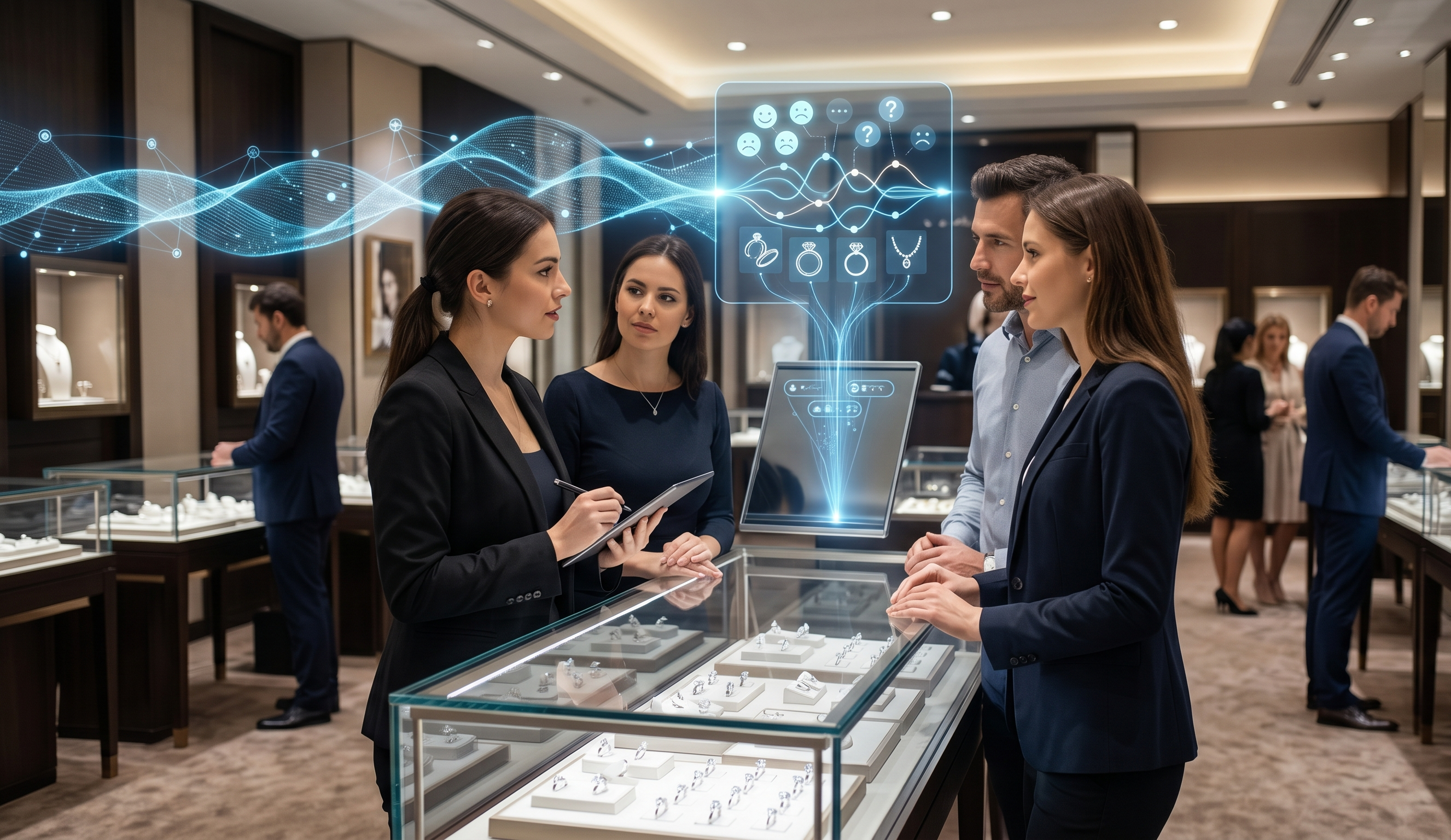
TABLE OF CONTENTS
1. The Most Valuable Data in Your Business Is Being Spoken Out Loud Every Day
Every jewellery store owner makes decisions. Decisions about which products to stock. Which marketing channels to invest in. How to train the team. What the customer experience should feel like. Where to focus energy in the months ahead.
Most of those decisions are made on a combination of sales history, gut feel, and accumulated experience. That is not a criticism. It is simply the reality of running a jewellery retail business without access to the one data source that would change everything.
That data source is the conversation happening on your sales floor right now.
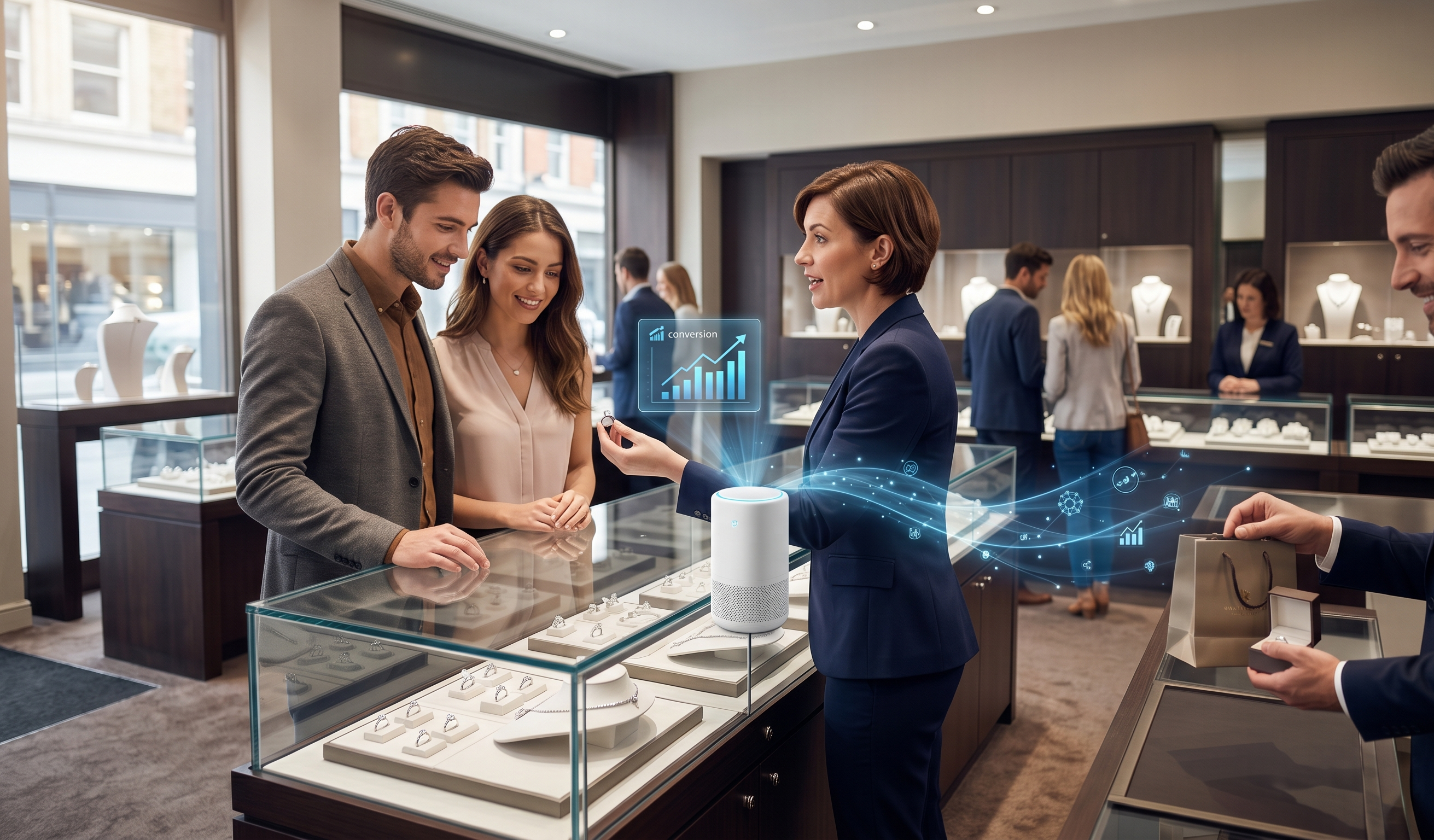
Your customers are telling your associates exactly what they want, what they are uncertain about, what is stopping them from buying, and what would make them spend more. They are revealing where they heard about you, what they expected when they walked in, and whether the reality matched that expectation.
None of that intelligence is making its way into your decision-making. Not because it does not exist, but because until now there has been no system to capture it.
2. What In-Store Conversation Analysis Actually Reveals
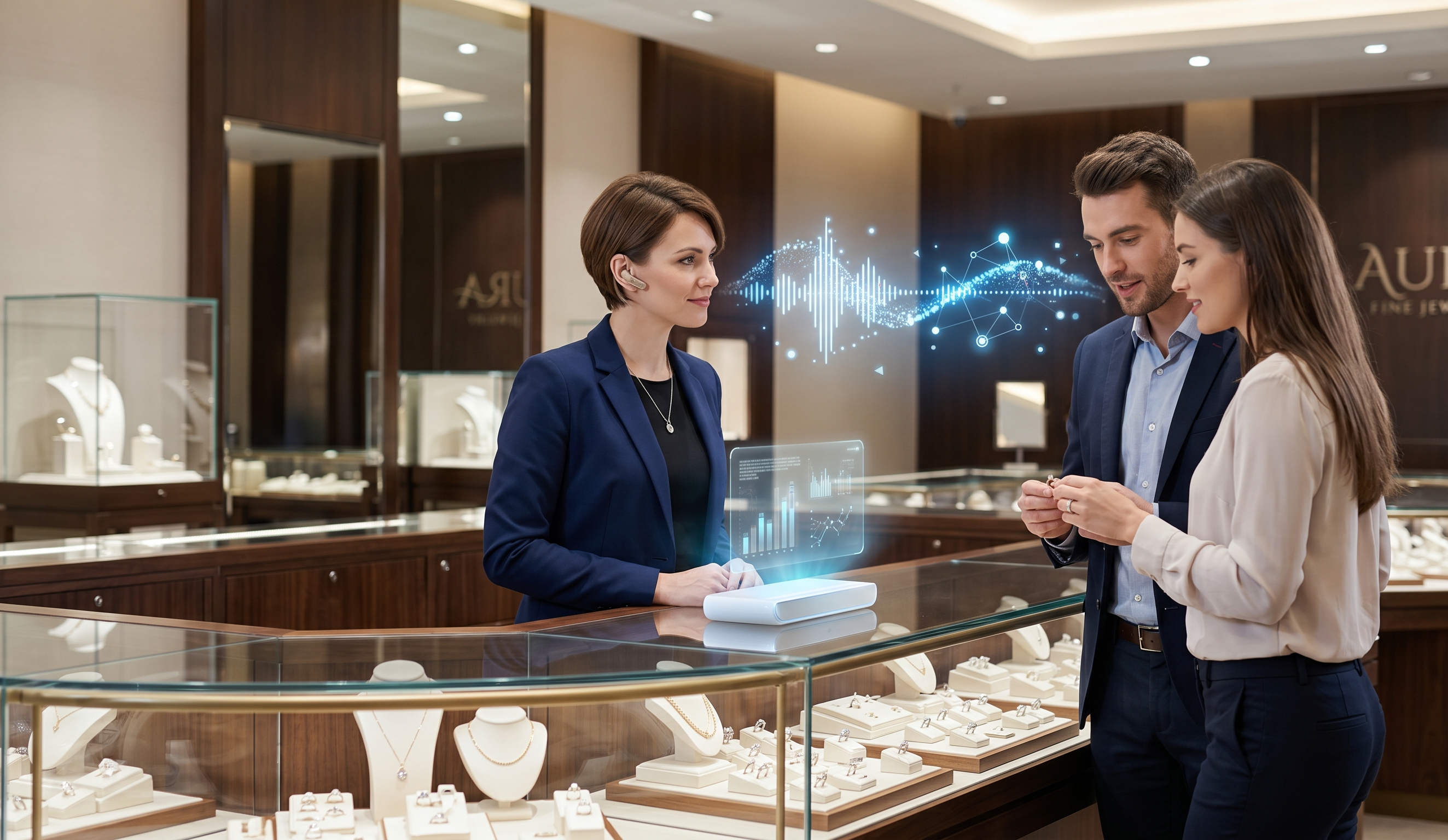
When an in-store voice intelligence platform begins analysing conversations in a jewellery store, the insights that emerge typically fall into several categories. Each one has direct implications for how the business is run.
• What Customers Actually Want: Sales data tells you what sold. It tells you nothing about what customers wanted but could not find, or what they almost bought before changing their mind. Conversation data fills that gap. Across dozens and then hundreds of analyzed interactions, clear patterns emerge around which product categories customers are most actively enquiring about, which styles and price points generate genuine excitement, and which areas of your range consistently underwhelm. This is not hypothetical market research. It is real demand intelligence drawn from the people who actually walked into your store this week.
• What Is Stopping Customers From Buying: Every conversation where a customer leaves without purchasing contains information about why. In-store customer behavior analysis surfaces the most common barriers to purchase across your customer base. For some stores, the dominant barrier is price confidence. Customers are interested but uncertain whether the value justifies the spend. For others, the barrier is product fit. Customers are coming in with a specific need and not finding the right answer in your current range. For others still, the barrier is timing. Customers are genuinely interested but feel a need to return with a partner or do more research first. Knowing which barrier is most prevalent in your specific store changes how you train your team, how you structure your product range, and how you design the in-store experience.
• How Customers Describe What They Are Looking For: One of the most practically useful outputs of conversation analysis is the language customers use to describe what they want. Customers do not describe jewellery the way product catalogues describe it. They do not lead with metal grades or stone specifications. They say things like "something that feels special but not over the top" or "classic enough to wear every day but still feels like a treat" or "the kind of thing she would never buy herself." That language is gold. It is how real people think about jewellery purchases. And it is the language that should be informing your marketing copy, your visual merchandising, your staff training, and your product descriptions. When you understand how your customers naturally articulate what they want, every part of your communication with them becomes sharper and more resonant.
• Where Your Customers Are Coming From: Customers regularly tell your associates what brought them in. They mention the Instagram post they saw last week. The recommendation from a friend who bought from you two years ago. The window display they noticed while walking past. The Google search that surfaced your store. This is marketing attribution data. It is being spoken aloud on your sales floor every day, and right now it is disappearing into the air. When in-store conversation intelligence captures those mentions systematically, you gain something that no digital analytics platform can give you. A clear, ongoing picture of which of your marketing efforts is genuinely driving customers through your door. Not click-through rates and impressions, but actual human beings walking into your store and spending money. That intelligence directly informs where your marketing budget should go next month.
3. The Product Insights You Cannot Get Any Other Way
There is a category of product intelligence that only conversation data can provide, and it is one of the most commercially valuable outputs of an in-store voice intelligence platform.
When a customer asks for something you do not stock, that request is usually lost. The associate apologizes, suggests the nearest alternative, and the moment passes. Multiply that across your entire team over a month, and you have dozens or hundreds of product demand signals that are generating zero intelligence for your buying decisions.
Conversation analysis captures those signals systematically. It identifies the products, styles, price points, and features that customers are repeatedly asking for but not finding. It surfaces the gaps between what your customers want and what your current range offers.
For a jewellery buyer or merchandising manager, this is transformative. Inventory decisions that were previously made based on trade show trends, supplier relationships, and historical sales data can now be informed by direct, current demand intelligence from the people you are actually selling to.
The result is a product range that is more precisely aligned with what your customers are looking for. Fewer items that sit in cases without generating interest. More items that customers respond to immediately because they reflect exactly what people have been asking for.
4. Customer Insights That Change How You Run the Business
Beyond product and marketing intelligence, in-store conversation analysis generates a deeper understanding of your customers as people. Who they are, what occasions are driving their visits, what emotions are connected to their purchases, and what kind of experience they are hoping for when they walk through your door.
That understanding changes things at a fundamental level.
It changes how you train your team. When you know that a significant portion of your customers are buying for gifting occasions rather than for themselves, your associates can be specifically trained to ask the questions that surface gifting needs and guide those customers more effectively.
It changes how you design the in-store experience. When you know that customers frequently mention feeling uncertain about quality when discussing price, you can proactively build quality education into every customer touchpoint, from how associates introduce pieces to the materials on display in your cases.
It changes how you think about your customer base. Rather than a vague sense of who your customers are, you develop a precise, evidence-based understanding of the real people coming into your store. What they care about, what they are looking for, and what would make them choose you again.
5. From Anecdote to Evidence
Every jewellery store owner has a mental model of their customer. It is built from years of observation, memorable interactions, and conversations that stuck in the mind. That model is valuable. But it is also incomplete, because it is built from the interactions that were noticed and remembered rather than from the full picture of every customer conversation.
In-store voice intelligence replaces that anecdotal model with an evidence-based one. Not by dismissing the owner's experience and instinct, but by grounding it in data that confirms, refines, and sometimes challenges what the gut has always assumed.
The owner who believed that most customers were price-sensitive discovers that price is actually the third most common concern, behind product fit and partner agreement. The manager who assumed that a particular product category was underperforming discovers that customers are asking for it frequently but associates are not presenting it effectively.
These discoveries do not just feel interesting. They change decisions. And changed decisions, made on the basis of real customer intelligence, produce better business outcomes.
6. The Intelligence Is Already There
Your jewellery store is already generating all of this intelligence. Every conversation your team has with every customer is full of product preferences, purchase motivations, marketing attributions, experience expectations, and buying signals.
The only thing missing is the system to capture it, organize it, and surface it in a form you can act on.
In-store voice intelligence is that system. It does not require your team to do anything differently. It does not disrupt the customer experience. It simply ensures that the intelligence your customers are already sharing does not go to waste.
"Your customers are telling you everything you need to know. It is time to start listening at scale."
"Want to find out what your in-store conversations are already revealing about your customers and products?Book a free demo
and we will show you the intelligence your jewellery store is generating every day."

About Jinn Research
Jinn Research studies what happens in real sales conversations on the retail floor. Our insights come from showroom, test drive and follow-up conversations captured by Jinn and scored from greeting to close.